
Therapy Type Finder
Find Your Best Match
Answer a few questions to discover which evidence-based therapy might work best for you. This tool uses research from the article to match your needs with proven approaches.
Your Best Match
Why This Works for You
Research Support
When someone says they're in therapy, what does that actually mean? It’s not just talking. It’s not just sitting quietly while someone nods. Real therapy for mental health is a structured, evidence-backed process designed to help people understand their thoughts, manage emotions, and change behaviors that hold them back. And it works - not for everyone all the time, but for a lot of people, in real, measurable ways.
Therapy Isn’t One Thing
There’s no single therapy for mental health. Think of it like choosing a tool for a job. You wouldn’t use a hammer to fix a leaky faucet, and you shouldn’t expect one kind of therapy to fix every emotional struggle. Different approaches work for different problems, personalities, and life situations.
Some people need to untangle deep-rooted childhood patterns. Others need help managing panic attacks that show up out of nowhere. Some are stuck in cycles of self-criticism. Each of these needs a different path.
The most common types you’ll hear about:
- Cognitive Behavioral Therapy (CBT) - This is the most studied form. It helps you spot negative thought patterns - like “I always fail” or “No one likes me” - and test them against reality. A 2023 meta-analysis of over 120 studies found CBT reduced symptoms of depression and anxiety in 60-70% of patients within 12 weeks.
- Acceptance and Commitment Therapy (ACT) - Instead of fighting thoughts, ACT teaches you to notice them without getting swept away. It’s useful for chronic stress, OCD, and people who feel trapped by their own minds. One study showed ACT helped reduce burnout in healthcare workers by 44% after 8 sessions.
- Dialectical Behavior Therapy (DBT) - Originally built for borderline personality disorder, DBT is now used for intense emotional swings, self-harm urges, and relationship chaos. It mixes mindfulness, emotion regulation, and interpersonal skills. In trials, it cut suicide attempts by 50% over a year.
- Psychodynamic Therapy - This digs into how past experiences shape present behavior. It’s slower, often lasting months or years, but helps people understand why they keep repeating the same painful patterns in relationships or work.
- Eye Movement Desensitization and Reprocessing (EMDR) - Used mostly for trauma. You recall a painful memory while following a therapist’s moving finger or sound. It helps the brain reprocess the memory so it stops triggering panic or flashbacks. The VA in the U.S. reports EMDR helped 78% of veterans with PTSD reduce symptoms significantly.
How Therapy Changes Your Brain
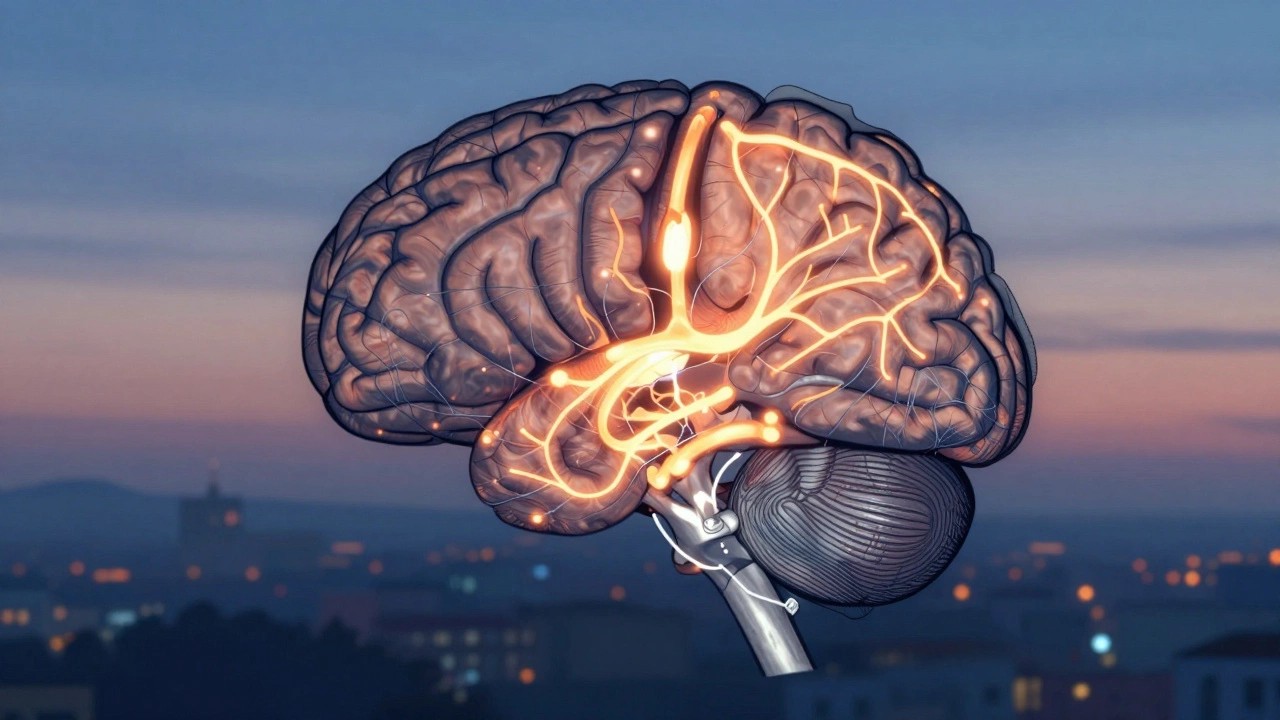
It’s not just “feeling better.” Therapy physically changes your brain. MRI scans show that after consistent therapy, areas linked to fear (the amygdala) calm down. Areas responsible for rational thinking (the prefrontal cortex) become stronger and more active. This isn’t magic - it’s neuroplasticity. Your brain rewires itself based on what you practice.
For example, someone with social anxiety might avoid parties. In therapy, they start small: saying hello to one new person each week. Each time they do it without fleeing, their brain learns: This didn’t kill me. It was fine. Over time, the fear shrinks.
Medication can help too - but it doesn’t teach skills. Therapy does. That’s why the best outcomes often come from combining both, especially for moderate to severe depression or anxiety.
Who Benefits the Most?
Therapy isn’t just for people in crisis. Many think you need to be “broken” to need it. That’s a myth. People use therapy to:
- Improve relationships - learning how to set boundaries, communicate without yelling, or stop repeating toxic patterns
- Build resilience - so stress at work or family pressure doesn’t derail them
- Recover from loss - not just death, but divorce, job loss, or moving away from home
- Manage chronic illness - depression often comes with diabetes, heart disease, or chronic pain. Therapy helps people cope with the emotional toll
- Prevent burnout - especially common among caregivers, teachers, and frontline workers
In India, a 2025 survey by the National Institute of Mental Health and Neurosciences (NIMHANS) found that 68% of urban professionals who started therapy for stress didn’t have a diagnosed disorder. They just felt stuck, drained, or emotionally numb. Therapy gave them back control.
What Therapy Doesn’t Do
It won’t magically fix your life. It won’t tell you what to do. A good therapist doesn’t give advice like a friend. They ask questions that help you find your own answers.
It’s not a quick fix. Most people need 8-20 sessions before they feel real change. Some need longer. That’s normal. Progress isn’t linear. You might feel worse before you feel better - especially when you start facing buried pain.
And therapy won’t work if you’re not ready. You can’t be forced into it. If you’re going because your partner said so, or your boss threatened to fire you, it rarely sticks. Real change happens when you want it for yourself.
Getting Started
How do you find the right therapist? It’s not about credentials alone. It’s about fit.
- Start with your doctor. Many general practitioners in India now refer patients to licensed mental health counselors.
- Use trusted platforms like Manas a mental health platform offering therapy sessions in Hindi, English, and regional languages with licensed psychologists or YourDOST a digital mental health service with over 500 verified counselors across India.
- Look for someone who specializes in your issue. A therapist good for grief may not be the best for ADHD.
- Ask for a free 15-minute call. Most therapists offer this. Pay attention to how they listen. Do they interrupt? Rush you? Sound bored? Or do they pause, reflect, and ask follow-ups?
- Check if they accept insurance or offer sliding scales. In cities like Bangalore, Mumbai, or Delhi, many private clinics now offer sessions from ₹500 to ₹2,000 based on income.
Online therapy works just as well as in-person for most issues. A 2024 study from the Indian Journal of Psychological Medicine found no difference in outcomes between video sessions and face-to-face for anxiety and depression.

What If It Doesn’t Work?
It’s okay if the first therapist doesn’t click. It happens. Try again. Don’t give up because one person didn’t get you.
Some people need group therapy. Others benefit from art or movement-based therapy. A few find relief through mindfulness apps like Headspace a meditation app with clinically validated programs for stress and sleep or Wysa an AI-powered mental health chatbot developed in India and used by over 2 million users as a supplement.
And if therapy alone isn’t enough, medication might be the next step. Antidepressants, anti-anxiety meds, or mood stabilizers aren’t “crutches.” They’re tools - like glasses for your mind.
Therapy Is a Skill, Not a Cure
The goal isn’t to never feel sad again. It’s to feel sadness without drowning in it. To feel anxious without running away. To feel angry without breaking things - or yourself.
Therapy gives you tools. You learn to breathe when panic hits. To pause before reacting. To speak your needs without fear. To sit with discomfort instead of running from it.
It’s not about becoming perfect. It’s about becoming more alive - more present, more honest, more in charge of your own life.
Is therapy only for people with serious mental illness?
No. Many people go to therapy for everyday struggles - stress at work, relationship conflicts, grief, low self-esteem, or feeling stuck. You don’t need a diagnosis to benefit. Therapy is for anyone who wants to understand themselves better and improve their emotional well-being.
How long does therapy usually take?
It varies. For mild anxiety or stress, many people see improvement in 8-12 sessions. For deeper issues like trauma or long-standing patterns, it may take 6 months to 2 years. The goal isn’t speed - it’s lasting change. Most therapists recommend weekly sessions at first, then space them out as you progress.
Can therapy help with physical health problems?
Yes. Chronic pain, heart disease, diabetes, and other physical conditions often come with emotional tolls - depression, fear, isolation. Therapy helps people cope with these challenges, stick to treatment plans, and reduce stress that can worsen symptoms. Studies show patients with diabetes who get therapy have better blood sugar control than those who don’t.
Is online therapy as effective as in-person?
For most issues like anxiety, depression, and stress, yes. A 2024 study in the Indian Journal of Psychological Medicine found no significant difference in outcomes between video therapy and face-to-face sessions. Online therapy is especially helpful in places with few therapists, or for people with mobility issues, busy schedules, or social anxiety.
What if I can’t afford therapy?
Many nonprofit organizations and government-run clinics in India offer free or low-cost counseling. Hospitals like NIMHANS, AIIMS, and private centers like Manas and YourDOST offer sliding scale fees. Some universities train therapists who provide low-cost sessions. Apps like Wysa offer free basic support. You don’t need to pay hundreds of rupees to start.
What’s Next?
If you’ve been thinking about therapy but haven’t taken the step, start small. Talk to one person you trust. Search for a counselor online. Book a 15-minute call. No pressure. No commitment. Just see how it feels.
Therapy isn’t about fixing brokenness. It’s about uncovering strength you didn’t know you had. And that’s worth trying.