
GLP-1 Weight Loss & Nutrition Estimator
Enter your details and click calculate to see your personalized nutritional targets based on the article guidelines.
Key Takeaways for Your Weight Loss Journey
- Ozempic mimics a natural hormone called GLP-1 to slow down digestion.
- It targets the brain's reward center to reduce food cravings and "food noise."
- Weight loss is a result of eating fewer calories, not a metabolic "magic trick."
- It requires medical supervision to manage side effects like nausea.
- Lifestyle changes are necessary to maintain results after stopping the medication.
The Science of the GLP-1 Hormone
To understand Ozempic weight loss, we have to talk about GLP-1 (Glucagon-Like Peptide-1). This is a hormone your body naturally produces in the intestines after you eat. In a healthy system, GLP-1 tells your pancreas to release insulin and tells your brain that you've had enough. The problem is that natural GLP-1 breaks down in minutes, which is why you might feel hungry again shortly after a meal.
Semaglutide is the active ingredient in Ozempic. It is a synthetic version of GLP-1, but it's engineered to last much longer in your system. Instead of disappearing in minutes, it stays active for a week. By keeping these GLP-1 levels high, the drug tricks your body into feeling a state of satiety that doesn't vanish the moment you step away from the dinner table.
How it Shuts Down 'Food Noise'
If you've ever found yourself thinking about your next meal while you're still eating your current one, you've experienced "food noise." This is a mental loop where your brain is obsessed with food. Ozempic crosses the blood-brain barrier and interacts with the Hypothalamus, the area of the brain that regulates hunger and thirst.
It specifically targets the neurons that trigger appetite. By activating these receptors, semaglutide lowers the reward value of high-calorie foods. Suddenly, that doughnut you usually crave doesn't look as appealing. You aren't just using willpower to resist; the biological drive to eat those specific foods is physically reduced. This makes the struggle of a restrictive diet feel significantly easier because the mental battle is mostly gone.
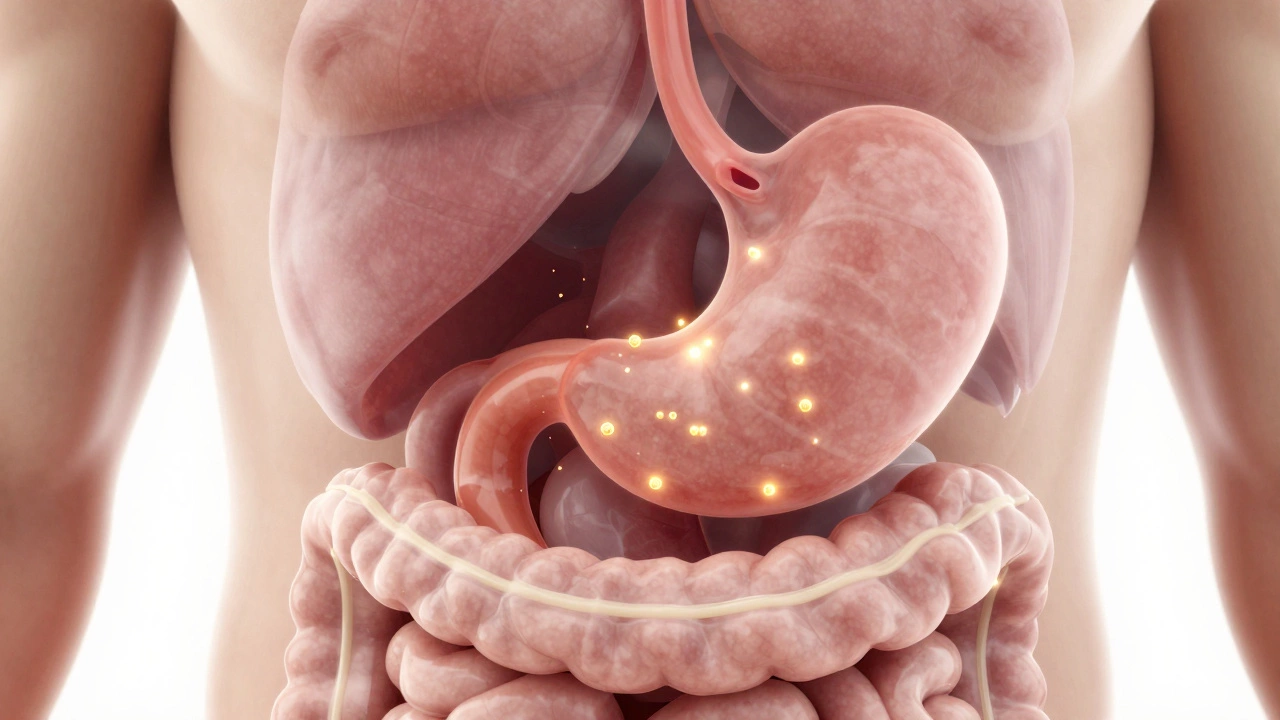
Slowing Down the Gut: Gastric Emptying
While the brain is being calmed, the stomach is slowing down. Ozempic causes a process called delayed Gastric Emptying. Normally, your stomach pushes food into the small intestine at a steady pace. Semaglutide slows this movement significantly.
Because food stays in your stomach longer, you feel physically full for a much longer duration. A small portion of grilled chicken and vegetables that might have left you hungry in an hour now keeps you satisfied for four or five. This physical fullness, combined with the mental satiety, creates a powerful calorie deficit. You aren't forcing yourself to starve; you're simply not feeling the urge to eat more.
| Feature | Standard Diet & Exercise | Ozempic (Semaglutide) |
|---|---|---|
| Hunger Control | Relies on willpower | Biologically suppressed |
| Digestion Speed | Normal/Fast | Slower gastric emptying |
| Blood Sugar Impact | Variable | Strongly regulated (lowers A1C) |
| Mental Effort | High (constant cravings) | Low (reduced food noise) |
The Role of Insulin and Blood Sugar
Ozempic was first created for Type 2 Diabetes, and its effect on glucose is a big part of why it helps with weight. When you eat, the drug triggers the pancreas to release Insulin, but only when blood sugar is actually high. This prevents the "sugar crashes" that often lead to binge eating.
By stabilizing blood sugar levels, you avoid the erratic spikes and drops that make you crave sugar and simple carbs. When your glucose is stable, your energy levels remain consistent throughout the day, which often makes it easier to stay active. This creates a positive loop: stable energy leads to more movement, which further supports the weight loss initiated by the drug.
What to Expect at Weight Loss Clinics
If you visit a professional clinic, they won't just hand you a pen and send you home. Because Ozempic is a powerful hormonal tool, the process is carefully managed. Most clinics start you on a low dose-usually 0.25 mg-for the first four weeks. This is the "loading phase," designed to let your digestive system adapt to the slower emptying process.
If you jump to a high dose too quickly, the food sitting in your stomach for too long can cause severe nausea or vomiting. Over several months, the dose is gradually increased. Doctors also monitor your muscle mass. A common pitfall of rapid weight loss is losing muscle instead of fat, which can slow down your metabolism. This is why clinics often insist on a high-protein diet and resistance training while on the medication.

The Trade-offs: Side Effects and Risks
It isn't all smooth sailing. Because the drug slows down the gut, the most common side effects are gastrointestinal. You might experience constipation, bloating, or a feeling of "sulfur burps." For some, the nausea can be intense during the first few weeks of a dose increase.
There are also more serious, though rarer, risks. Some users develop Pancreatitis, which is an inflammation of the pancreas, or gallbladder issues. This is why medical screening is non-negotiable. A doctor needs to check your family history and kidney function before prescribing this medication. It is not a casual supplement; it is a clinical intervention.
Avoiding the 'Rebound' Effect
The biggest question people ask is: "What happens when I stop?" If you use Ozempic to lose 50 pounds but never change your relationship with food, those pounds are likely to return. Once the medication is removed, the GLP-1 levels drop, the gastric emptying speeds back up, and the "food noise" returns with a vengeance.
The goal of using the drug should be to use the "quiet period" to build sustainable habits. This means learning how to eat volume-dense, low-calorie foods and establishing a consistent gym routine. The drug provides the window of opportunity, but the lifestyle provides the permanent result. Think of it as training wheels for your metabolism.
Is Ozempic the same as Wegovy?
Yes and no. Both contain the exact same active ingredient, semaglutide. However, Ozempic is FDA-approved specifically for type 2 diabetes, while Wegovy is FDA-approved specifically for chronic weight management. They have different dosing schedules and branding, but the biological mechanism of action is identical.
How long does it take to see weight loss results?
Most people notice a decrease in appetite within the first week. However, significant weight loss usually becomes apparent after the second or third month, once the dose has been titrated up to a therapeutic level (like 1.0 mg or 2.0 mg). Results vary based on starting weight and activity levels.
Can I take Ozempic if I don't have diabetes?
Many people do, which is called "off-label use." While it is effective for weight loss in non-diabetics, it must be prescribed by a doctor who determines the benefit outweighs the risks. A weight loss clinic can help determine if you meet the BMI criteria for this treatment.
Does Ozempic cause permanent changes to metabolism?
No, the changes are pharmacological and temporary. Once the drug leaves your system, your hormones and digestion return to their previous state. This is why maintaining muscle mass through protein and exercise is critical to prevent your resting metabolic rate from dropping too low.
What should I do if I feel too nauseous to eat?
Focus on small, frequent meals instead of three large ones. Stick to bland, easy-to-digest foods like steamed fish or rice. Avoid greasy, fried foods, as these slow down digestion even further and worsen nausea. If nausea persists, contact your provider to discuss dose adjustment.
Next Steps and Troubleshooting
If you are considering this path, your first step is a full blood panel. You need to know your baseline A1C and kidney markers. If you've tried multiple diets and always failed due to cravings, you are a prime candidate for a GLP-1 consultation.
For those already on the medication who are hitting a plateau, don't panic. Weight loss isn't linear. Try increasing your daily protein intake to 1.2g to 1.5g per kilogram of body weight and incorporate strength training. If you are experiencing severe constipation, incorporate a soluble fiber supplement or increase water intake, as semaglutide can make you forget to drink enough fluids.