
ADHD Severity Assessment Tool
How This Tool Works
This tool helps you understand ADHD severity based on DSM-5 criteria. You'll rate how often you experience specific symptoms. Your results will show your severity level (mild, moderate, or severe) and what it means for daily functioning.
ADHD Symptoms Assessment
Select all symptoms you experience regularly (more than half the time)
Your ADHD Severity Assessment
out of 16 symptoms
This assessment is based on DSM-5 criteria for ADHD severity. Remember, this tool is for informational purposes only and should not replace professional evaluation.
There are no official "five levels" of ADHD in medical guidelines. That’s a myth you might hear online, in social media posts, or even from well-meaning but misinformed people. The truth is simpler-and more useful-if you know where to look.
ADHD Isn’t Measured in Levels
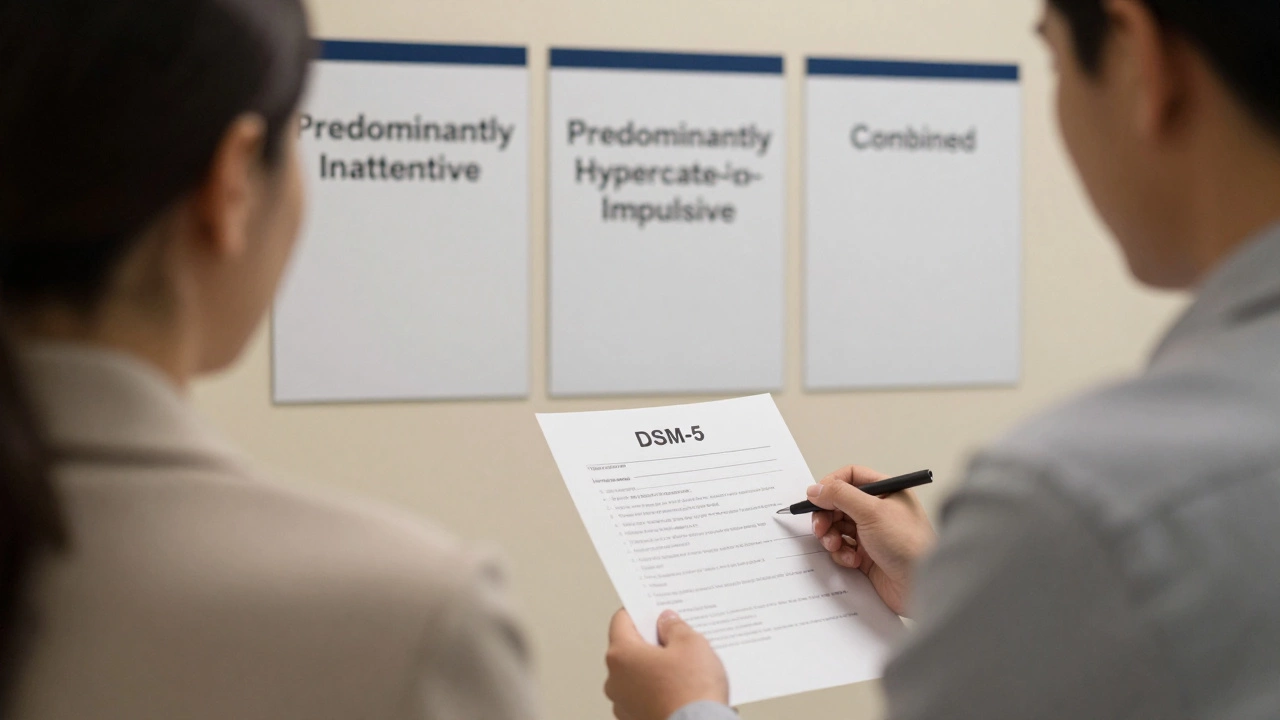
The Diagnostic and Statistical Manual of Mental Disorders (DSM-5), the standard used by doctors and clinicians worldwide, doesn’t classify ADHD into levels like Level 1, Level 2, and so on. Instead, it describes ADHD as a neurodevelopmental disorder with three main presentations: predominantly inattentive, predominantly hyperactive-impulsive, and combined type. These aren’t tiers of severity-they’re patterns of behavior.
Severity-mild, moderate, or severe-is assessed separately, based on how many symptoms a person has and how much those symptoms interfere with daily life. A child with three inattentive symptoms and no major disruptions at school might be labeled mild. Another child with eight symptoms, failing grades, frequent meltdowns, and trouble making friends? That’s severe. The same applies to adults.
So when people talk about "five levels," they’re often mixing up outdated ideas, pop psychology, or personal interpretations. Real diagnosis doesn’t work that way. But understanding how ADHD varies from person to person? That’s where the real insight begins.
What Actually Determines ADHD Severity?
Doctors don’t guess severity. They use clear criteria. To be diagnosed with ADHD, a person must show at least five symptoms (six if under age 17) in one or both categories: inattention and/or hyperactivity-impulsivity. These symptoms must be present for at least six months, appear before age 12, happen in more than one setting (like home and school), and cause clear problems in relationships, school, or work.
Severity is rated based on three things:
- Number of symptoms: Someone with six symptoms might be mild; someone with nine or more is likely moderate to severe.
- Impact on functioning: Does the person struggle to hold a job? Can they keep up with bills? Do they have constant arguments with family? These are red flags for higher severity.
- Need for support: Mild cases might manage with coaching or structure. Severe cases often need medication, therapy, and school or workplace accommodations.
There’s no scorecard. No point system. Just clinical judgment based on real-life outcomes. A person might have all 9 inattentive symptoms but still do well in college because they’ve built coping systems. That’s moderate, not severe. Another person might have only five symptoms but can’t hold a job because they’re always late, forgetful, and overwhelmed. That’s severe.
Why People Think There Are Five Levels
The idea of five levels probably comes from confusion with other conditions. Autism Spectrum Disorder (ASD) used to be grouped into three levels of support needs in the DSM-5. Some websites and YouTube videos mistakenly applied that model to ADHD. Others created their own five-tier systems to make the condition feel more "organized"-but these aren’t backed by science.
There’s also the influence of online quizzes. You’ve probably seen them: "Which ADHD Level Are You?" with options like "Level 1: Just a little forgetful" to "Level 5: Can’t get out of bed." These are entertaining, not diagnostic. They can even be harmful. Someone with mild ADHD might read "Level 5" and feel hopeless. Someone with severe ADHD might scroll past it thinking, "That’s not me-I’m just lazy."
Real ADHD doesn’t fit into a personality quiz. It’s messy, variable, and deeply personal.
How ADHD Shows Up Differently Across Ages
ADHD doesn’t stay the same over time. What looks like hyperactivity in a 7-year-old might look like restlessness in a 25-year-old. Inattentiveness in a teen might turn into chronic procrastination in adulthood.
Children: Often show obvious signs-fidgeting, blurting out answers, losing school supplies, interrupting games. They might be labeled "disruptive" or "lazy." Teachers report them as having trouble sitting still or finishing tasks.
Teens: Hyperactivity fades a bit. Inattention becomes the bigger issue. They forget homework, miss deadlines, lose track of time, and struggle with organization. Social rejection is common. Some start using caffeine or stimulants illegally to focus.
Adults: Symptoms look different. Chronic lateness, missed appointments, cluttered homes, impulsive spending, emotional outbursts, and relationship strain are common. Many adults only realize they have ADHD after their child is diagnosed. They think, "Wait-that’s me."
There’s no "level" that says "this is what adult ADHD looks like." Two adults with the same diagnosis might have completely different lives-one runs a successful business, the other can’t hold a job. Both have ADHD. The difference isn’t in the diagnosis. It’s in support, environment, and coping strategies.
What Really Helps: Diagnosis, Not Labels
Labeling ADHD into artificial levels doesn’t help anyone. What helps is accurate diagnosis and personalized support.
For a child with mild ADHD, a structured routine, classroom accommodations, and parent training might be enough. For a teen with moderate ADHD, therapy (like CBT) and possibly stimulant medication can make a huge difference. For an adult with severe ADHD, medication, coaching, and workplace adjustments might be necessary to function.
Here’s what works in real life:
- Behavioral therapy for children and parents
- Stimulant medications (like methylphenidate or amphetamines) for moderate to severe cases
- Non-stimulant options (like atomoxetine or guanfacine) when stimulants don’t work or cause side effects
- Coaching for organization, time management, and emotional regulation
- Workplace or school accommodations: extended time, quiet spaces, task breakdowns
There’s no one-size-fits-all treatment. And there’s no level system that tells you which one you need. Only a trained professional-psychiatrist, psychologist, or neurologist-can assess your symptoms, history, and life impact to guide treatment.

What to Do If You Think You or Someone Has ADHD
Don’t rely on TikTok quizzes or YouTube videos. Don’t self-diagnose based on a list of symptoms. Go to a licensed mental health provider who specializes in ADHD.
Here’s what to expect:
- A clinical interview-about your childhood, school history, work performance, relationships.
- Standardized rating scales filled out by you and, if possible, someone who knows you well (partner, parent, coworker).
- Review of medical history to rule out thyroid issues, sleep disorders, or anxiety that mimic ADHD.
- A diagnosis based on DSM-5 criteria-not a level, but a clinical presentation.
- A treatment plan tailored to your needs, not a template.
Getting diagnosed isn’t about getting a label. It’s about getting the right tools to live better.
Myths vs. Reality: Quick Reference
| Myth | Reality |
|---|---|
| ADHD has five levels of severity. | ADHD has three presentations and three severity ratings: mild, moderate, severe. No levels. |
| Only kids have ADHD. | ADHD is a lifelong condition. 60-70% of children keep symptoms into adulthood. |
| People with ADHD are just lazy or unmotivated. | ADHD is a neurological difference in executive function, not willpower. |
| Medication is the only solution. | Medication helps many, but therapy, coaching, and environment changes are equally important. |
| ADHD is overdiagnosed. | Studies show ADHD is underdiagnosed, especially in women and adults. |
Final Thought: Stop Searching for Levels. Start Finding Support.
ADHD isn’t a ladder you climb or a box you check. It’s a complex, individual experience shaped by biology, environment, and life history. The goal isn’t to fit into a level-it’s to find what helps you function, feel better, and live with less frustration.
If you’re wondering whether you or someone you care about has ADHD, the best step isn’t to Google "ADHD levels." It’s to talk to a professional who understands the real picture. You don’t need a level. You need understanding. And that’s something no quiz can give you.
Are there official levels of ADHD like Level 1, 2, 3, 4, and 5?
No, there are no official levels of ADHD. The DSM-5, the standard diagnostic manual used by clinicians, describes ADHD by three presentations-predominantly inattentive, predominantly hyperactive-impulsive, and combined-and rates severity as mild, moderate, or severe based on symptom count and functional impact. The idea of five levels is a myth, often spread by online quizzes and social media.
Can ADHD get worse over time?
ADHD doesn’t necessarily get worse, but life demands change. What was manageable in childhood-like forgetting homework-can become a crisis in adulthood when you’re managing bills, jobs, and relationships. Without support, symptoms can feel more overwhelming. But with the right tools-therapy, medication, structure-many people find their symptoms become easier to manage as they age.
Is ADHD just lack of discipline?
No. ADHD is a neurodevelopmental disorder linked to differences in brain structure and function, especially in areas that control attention, impulse control, and executive function. People with ADHD often want to focus or be organized-they can’t. It’s not laziness or poor willpower. It’s biology.
Can adults be diagnosed with ADHD for the first time?
Yes. Many adults are diagnosed for the first time in their 30s, 40s, or even later. This often happens after a child is diagnosed, and the parent recognizes their own symptoms. To be diagnosed as an adult, you must show evidence of symptoms that began before age 12-even if they weren’t recognized at the time.
What’s the difference between ADHD and just being distracted?
Everyone gets distracted. ADHD means those distractions are constant, uncontrollable, and interfere with daily life. You might forget appointments for months, miss deadlines repeatedly, lose important items daily, or struggle to finish simple tasks-even when you really want to. It’s not about being busy. It’s about a neurological barrier to focus and follow-through.