Targeted Therapy: What It Is and How It Changes Cancer and Skin Treatment
When you hear targeted therapy, a treatment that focuses on specific molecules involved in disease growth. Also known as precision medicine, it doesn't just blast your whole body with chemicals—it finds the exact weakness in the problem and hits it. This is how modern skin cancer and melanoma treatments work today, and why some people see results where older methods failed. Unlike chemo, which kills fast-growing cells no matter where they are, targeted therapy uses drugs designed to lock onto specific proteins or genes that drive abnormal cell growth. Think of it like a key fitting only one lock. If your cancer has that lock, the drug opens it. If not, it does nothing. That’s why doctors now test tumors before starting treatment—because not everyone’s cancer is the same.
This approach isn’t just for advanced cancers. It’s also changing how we treat stubborn skin conditions like severe acne, psoriasis, and even some forms of eczema. Drugs that block inflammatory signals in the skin—like TNF-alpha or IL-17—are now standard for people who don’t respond to creams or oral meds. These are molecular therapy, treatments that interfere with specific biological pathways at the cellular level. They work because they’re not guessing—they’re following the science of your body’s own signals. And because they’re more precise, side effects are often milder than traditional drugs.
What makes targeted therapy powerful isn’t just the drugs themselves, but how they’re chosen. A biopsy, genetic test, or skin sample can reveal which mutations or proteins are active in your condition. That’s why two people with the same diagnosis might get completely different treatments. One might take a pill that blocks a BRAF gene mutation. Another might get an injection that stops IL-23. Both are targeted therapy, a treatment that focuses on specific molecules involved in disease growth, but they’re not interchangeable. This is the future of dermatology and oncology: personalization, not one-size-fits-all.
Some of the posts below show how these same principles apply beyond cancer. You’ll find discussions on how medications like semaglutide and Ozempic work by targeting specific hormones in the body—another form of precision medicine. Others explore how herbal supplements can interfere with these treatments, or why certain cancer types respond better than others. There’s no fluff here. Just real examples of how science is shifting from broad treatments to exact ones. Whether you’re dealing with skin cancer, chronic acne, or just want to understand why your doctor ordered a genetic test, this collection gives you the facts you need to ask the right questions.
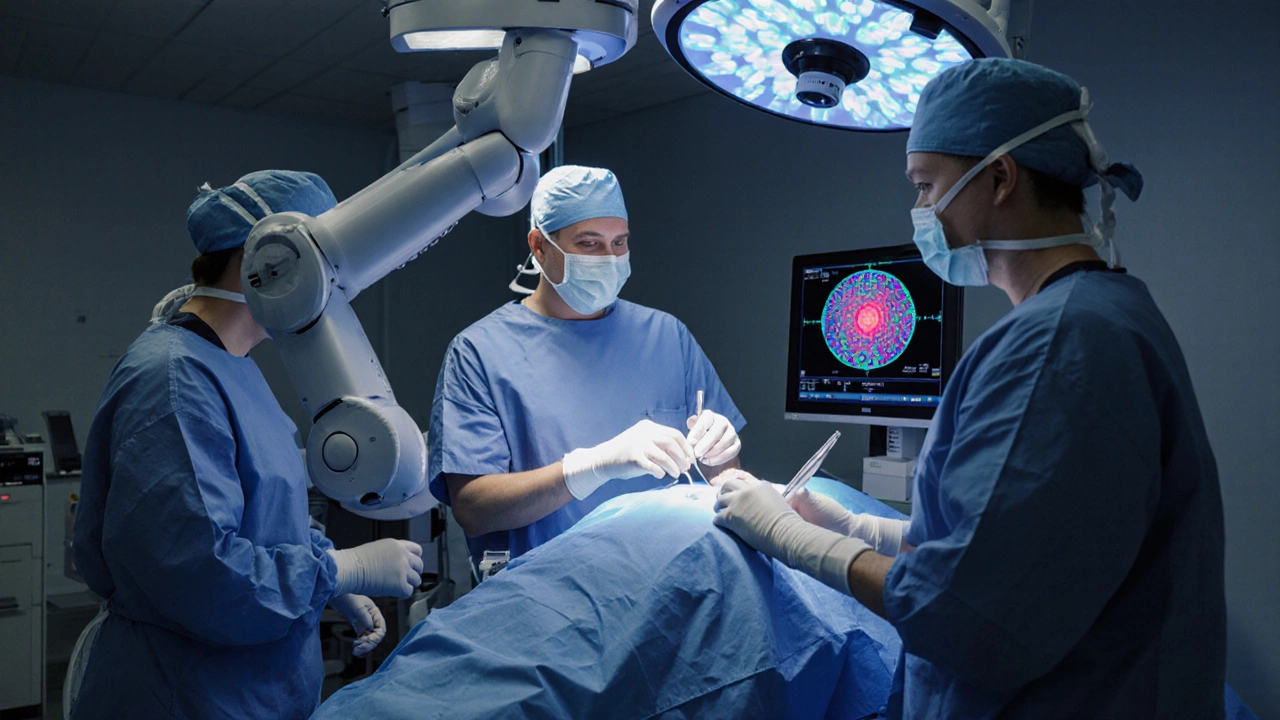
What Are the Top 5 Cancer Treatments Today?
Learn about the top five cancer treatments used today-surgery, chemotherapy, radiation, immunotherapy, and targeted therapy-and how they’re saving lives with precision and personalization.
read more