Cancer Statistics: Survival Rates, Aggressive Types, and What They Really Mean
When we talk about cancer statistics, numerical data that track how often cancer occurs, how it progresses, and how people survive it. Also known as cancer incidence and survival data, it’s not just numbers—it’s the difference between hope and fear when you or someone you love gets a diagnosis. These stats don’t tell you what will happen to you, but they do show what’s possible. For example, thyroid, prostate, and breast cancers have five-year survival rates over 90% in early stages, thanks to screening and modern treatment. That’s not luck. That’s science working.
But not all cancers behave the same. The most aggressive cancer, types that spread fast and resist treatment, like pancreatic or lung cancer in late stages have survival rates under 20%. Why? Because they’re often found too late. Early detection changes everything. That’s why stats on symptoms, screening guidelines, and risk factors matter more than ever. And it’s not just about one type. cancer survival rates, how many people live five years after diagnosis vary wildly by stage, age, access to care, and even where you live. In India, delays in diagnosis still hurt outcomes—but awareness is growing.
What you’ll find in the posts below isn’t a list of scary numbers. It’s the real story behind those numbers. You’ll see how cancer treatments like immunotherapy and targeted therapy are turning once-deadly cancers into manageable conditions. You’ll learn which cancers are most survivable and why. You’ll also see which ones are the most aggressive—and what you can do to catch them early. No hype. No guesswork. Just facts from real studies, real patients, and real doctors. This isn’t about predicting your future. It’s about giving you the tools to take control of it.
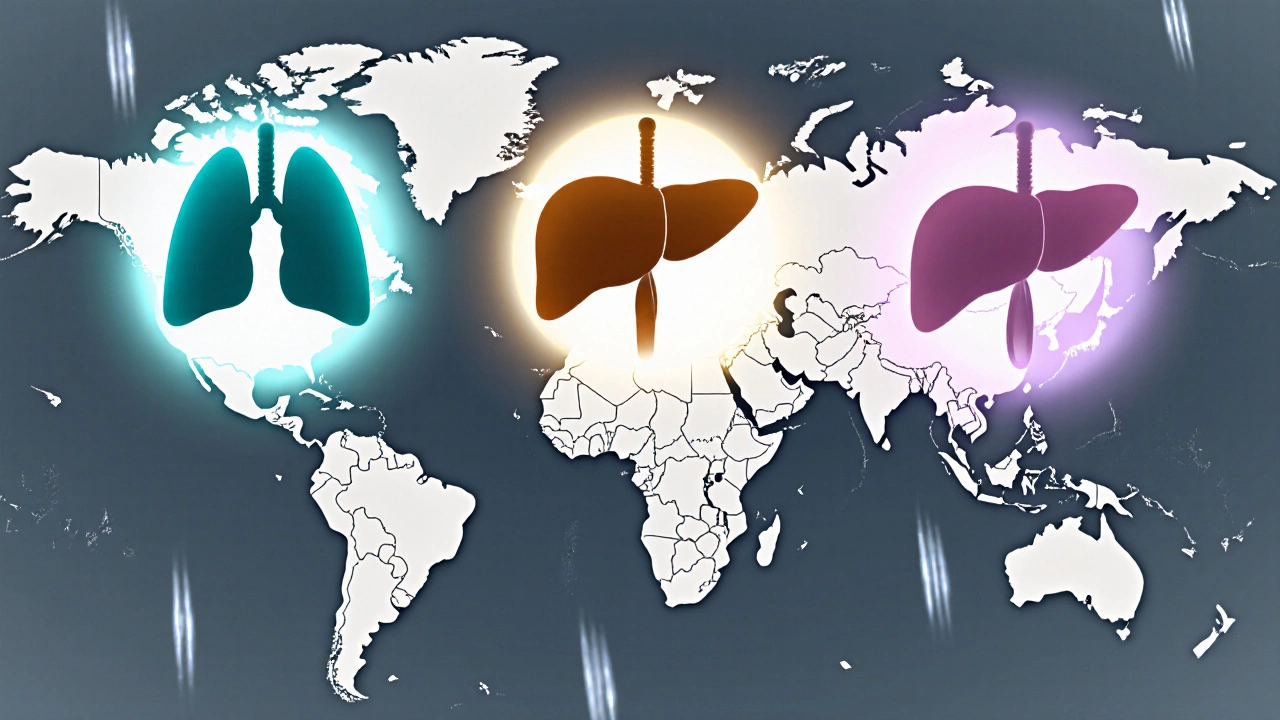
Top 3 Deadliest Cancers Worldwide - Facts, Stats, and What to Watch For
Learn which cancers cause the most deaths worldwide, see key stats, risk factors, symptoms, and early‑detection tips for lung, liver and pancreatic cancer.
read more