
Personalized Knee Replacement Recovery Calculator
Recovery Timeline Estimator
Get a personalized recovery timeline based on your unique factors
Important Recovery Notes
This calculator provides an estimate based on clinical data. Your actual recovery may vary based on individual healing factors. Always follow your surgeon's specific recommendations.
After knee replacement surgery, most people want one thing: how long until I can walk normally again? The answer isn’t a single number-it’s a process. But if you’re asking for a practical timeline, most patients need at least 4 to 6 weeks of focused rest and limited activity before they start feeling like themselves again. Full recovery, where you can walk without pain, climb stairs easily, and return to light activities like gardening or walking the dog, usually takes 3 to 6 months.
What Happens in the First Week?
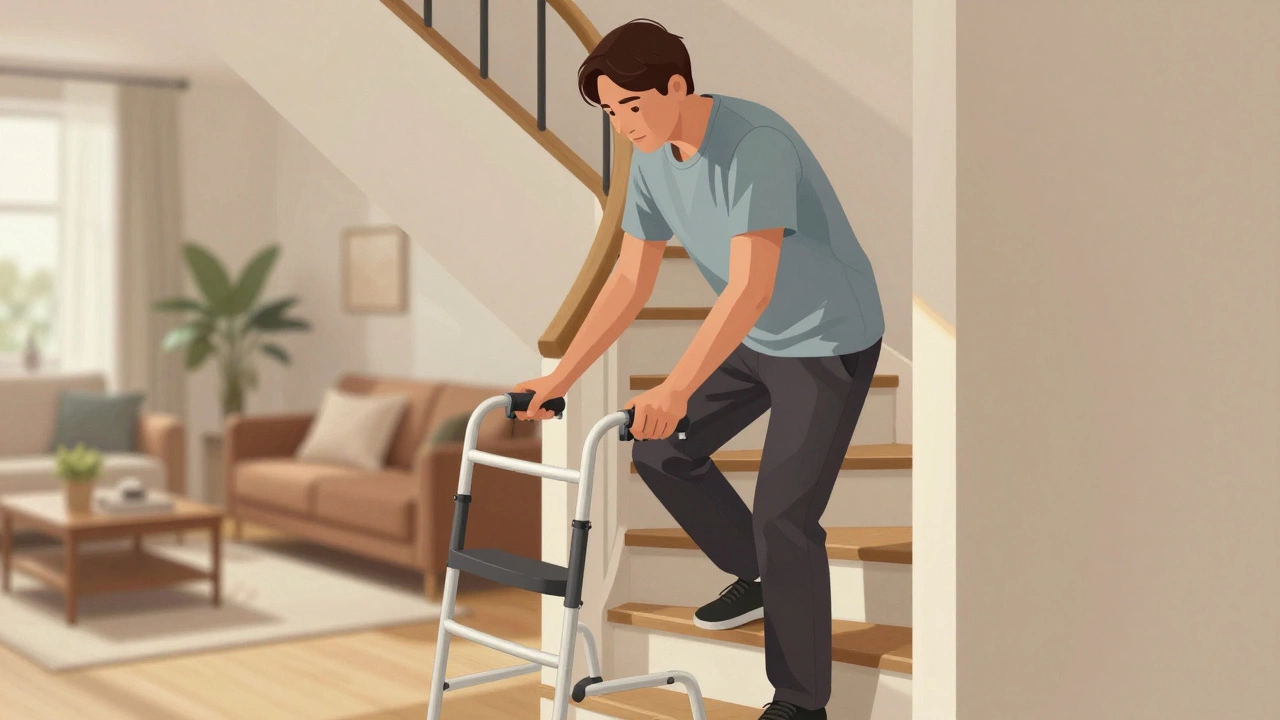
The first 7 days after surgery are about survival, not speed. You’re not supposed to be up and moving like nothing happened. Your knee will be swollen, stiff, and sore. Most patients stay in the hospital for 1 to 3 days, depending on their health and how smoothly the surgery went. Even after discharge, you’ll need help with basic tasks-getting out of bed, using the bathroom, dressing-because bending your knee too far too soon can cause damage or delay healing.You’ll start physical therapy within 24 hours. This isn’t about exercise yet-it’s about preventing blood clots, reducing swelling, and learning how to walk with crutches or a walker. Many people are surprised that they’re walking the day after surgery. But walking here means short, slow steps with full support. No rushing. No pushing. Just movement to keep blood flowing.
Weeks 2 to 6: The Critical Rest Phase
This is when most patients make the biggest mistake: trying to do too much too soon. You feel better. The pain drops. Your knee doesn’t feel like it’s on fire anymore. So you start walking longer distances, climbing stairs without help, or even trying to drive. Bad idea.During weeks 2 to 6, your body is rebuilding the tissues around your new knee. The ligaments, muscles, and skin are still healing. Overdoing it can cause inflammation, loosen the implant, or lead to falls. Most doctors recommend:
- Staying off your feet as much as possible between therapy sessions
- Avoiding stairs unless absolutely necessary
- Not lifting anything heavier than 5 pounds
- Keeping your leg elevated when sitting
- Using ice packs 3 to 4 times a day for 15 minutes
By week 6, you should be able to walk without a walker or cane, but you still shouldn’t be jogging, squatting, or kneeling. That’s not the finish line-it’s just the starting point for real recovery.
Weeks 6 to 12: Transitioning to Activity
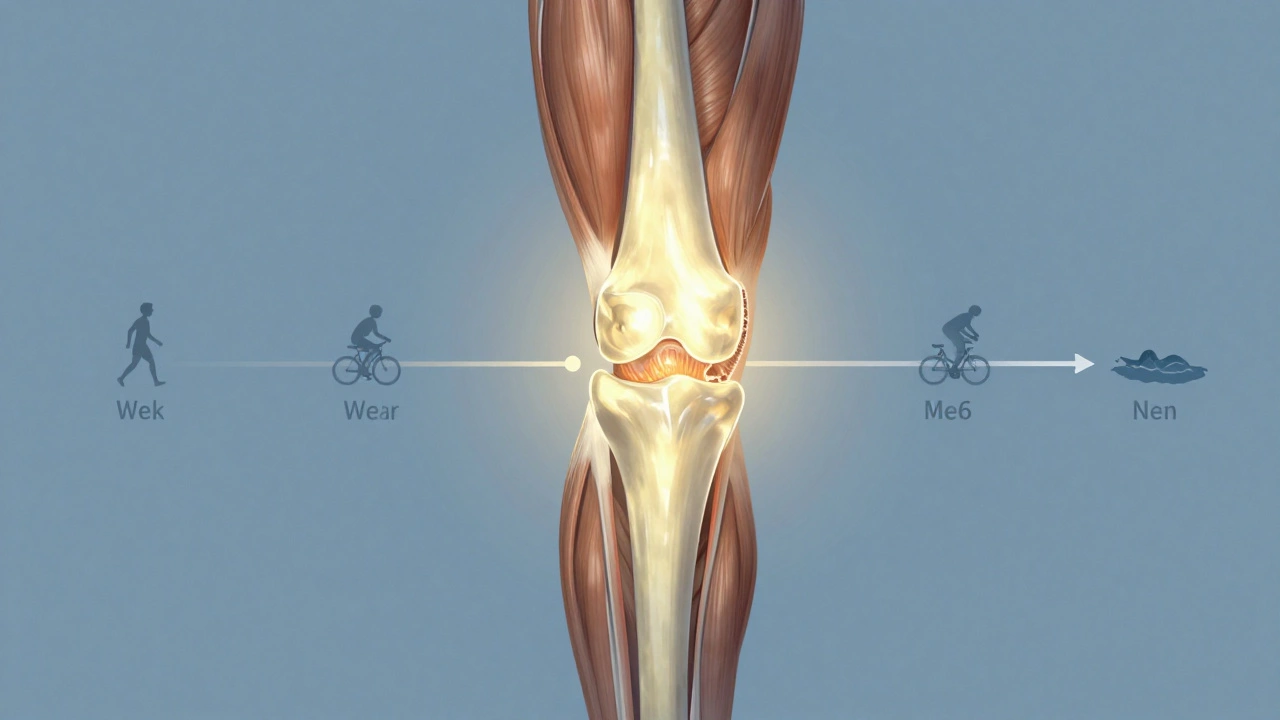
This is when physical therapy shifts from basic mobility to strength and control. You’ll start doing exercises like leg lifts, stationary biking, and gentle squats-under supervision. Your goal is to regain full range of motion (bending your knee to at least 110 degrees) and rebuild the quadriceps muscle, which often shrinks after surgery.By week 10 to 12, most people can return to light daily activities: short walks, shopping, driving, and even light housework. But you still need to avoid high-impact movements. No running, jumping, or playing tennis. Even hiking on steep trails should wait until after 6 months.
A study from the Journal of Bone and Joint Surgery in 2024 followed 1,200 patients over 18 months. Those who waited at least 12 weeks before returning to moderate activity had 40% fewer complications than those who rushed back. That’s not a suggestion-it’s a pattern backed by hard data.
Months 3 to 6: The Real Recovery Window
Three months in, you might think you’re done. But your knee is still adapting. The artificial joint isn’t just sitting there-it’s integrating with your bone, your muscles are relearning how to support it, and your brain is recalibrating how to move without pain.By month 4, many patients can return to work if their job is sedentary. If you stand or walk a lot-like a teacher, nurse, or shopkeeper-you’ll likely need 5 to 6 months before you’re back to full capacity. Even then, you’ll need to take breaks, wear supportive shoes, and avoid standing for more than 30 minutes at a time.
At 6 months, most people can resume low-impact hobbies: swimming, cycling, golf, and walking. You might even feel better than you did before surgery. But the key word is low-impact. High-impact sports like basketball, skiing, or heavy weightlifting still carry risk. Your new knee can handle walking, not pounding.
What If You Don’t Rest Enough?
Skipping rest isn’t brave-it’s dangerous. Rushing recovery leads to three common problems:- Excessive swelling and pain that lasts for months instead of weeks
- Scar tissue buildup that limits your range of motion permanently
- Implant loosening, which may require revision surgery
One patient I know from Bangalore tried to walk 10,000 steps a day by week 3. He ended up in the ER with a swollen, red knee and a fever. Turns out, he had a low-grade infection caused by overuse. He needed antibiotics and another 8 weeks of rest. He lost 3 months of progress because he didn’t listen to the timeline.
Factors That Change Your Recovery Time
Your age, weight, fitness level, and overall health matter more than you think. A 55-year-old who exercises regularly and has no diabetes or heart issues might recover in 3 months. A 72-year-old with obesity and arthritis in other joints could take 8 months or more.Other factors:
- Weight: Every extra pound adds pressure on your new knee. Losing 10 pounds before surgery can cut recovery time by weeks.
- Pre-surgery strength: People who did thigh-strengthening exercises before surgery heal faster.
- Smoking: Smokers take 50% longer to heal. Nicotine cuts off blood flow to healing tissues.
- Follow-up care: Skipping physical therapy or not doing home exercises doubles your recovery time.
When Can You Drive Again?
Most patients can drive after 4 to 6 weeks-but only if:- You’re off strong painkillers (like opioids)
- You can bend your knee enough to press the pedals
- You can slam on the brakes without pain
Some people try driving at 3 weeks and end up braking too slowly because their knee is still stiff. That’s not just risky-it’s illegal in many places if you’re still on pain meds. Wait until your doctor says it’s safe.
Long-Term Care After Recovery
Even after 6 months, your knee needs care. It’s not a car part you install and forget. You need to:- Keep your weight under control
- Do simple leg exercises 3 times a week
- Wear supportive shoes
- Avoid kneeling or squatting for long periods
- Get an X-ray every 2 to 3 years to check implant position
Most knee replacements last 15 to 20 years. But if you’re hard on them early, they can wear out faster. Think of it like a tire: gentle driving = long life. Aggressive driving = early replacement.
Can I walk immediately after knee replacement surgery?
Yes, but only with help. Most patients stand and take a few steps with a walker or crutches the day after surgery. This is to prevent blood clots and keep circulation moving. It’s not a test of strength-it’s a medical requirement. Don’t try to walk on your own yet.
How long should I use a walker or cane?
Most people use a walker for 2 to 4 weeks, then switch to a cane for another 2 to 4 weeks. By week 6, many can walk without support. But if you still feel unsteady at 8 weeks, don’t push it. Stability matters more than speed.
Is it normal to have pain after 3 months?
Mild discomfort, especially after activity or in rainy weather, is normal. Sharp pain, swelling, redness, or heat around the joint is not. That could mean infection or implant issues. Contact your surgeon if pain gets worse after 3 months or wakes you up at night.
Can I climb stairs after knee replacement?
You can start climbing stairs around week 3 or 4, but only with handrails and one step at a time. Lead with your good leg going up, and your operated leg going down. Avoid carrying things while climbing. Most patients can do stairs normally by week 8, but take it slow.
When can I return to work?
If your job is desk-based, you can return at 4 to 6 weeks. If you stand, walk, or lift things, wait 8 to 12 weeks. Some people need up to 6 months if their job is physically demanding. Always check with your doctor before going back.
Do I need to keep doing exercises after recovery?
Yes. Your new knee relies on muscle strength to stay stable. Do simple exercises like straight-leg raises, heel slides, and stationary biking 3 times a week for life. Skipping them leads to stiffness and weakness over time.