Walking Fat Loss Calculator
Your Walking Progress
Your Fat Loss Estimate
Progress to target:
Estimated fat loss after 12 weeks
Your Personalized Timeline
This estimate assumes consistent walking and minimal diet changes. For best results, combine with healthy eating habits as explained in the article.
Walking doesn’t magically melt belly fat overnight-but it’s one of the most effective, underrated tools you’ve already got in your pocket. If you’re tired of crash diets, expensive gym memberships, or supplements that promise the moon, walking is the quiet, steady answer. It’s free, it’s accessible, and it works-if you do it right.
Why Belly Fat Is So Stubborn
Belly fat isn’t just about looking good in jeans. It’s visceral fat-the kind that wraps around your liver, pancreas, and intestines. This isn’t the same as subcutaneous fat under your skin. Visceral fat is metabolically active. It releases hormones and inflammatory chemicals that raise your risk for type 2 diabetes, heart disease, and high blood pressure.
Men tend to store more fat here than women, especially after 40. Hormones, stress, and sugar intake all play a role. But here’s the truth: you can’t spot-reduce fat. No crunches, no ab machines, no magic belts will target belly fat alone. Fat loss happens system-wide. And walking? It’s one of the best ways to create the calorie deficit your body needs to start burning stored fat-including that stubborn midsection.
How Walking Burns Fat-And What Science Says
A 2023 study from the University of Massachusetts tracked 2,500 adults over six months who walked at least 7,000 steps a day. Those who maintained the habit lost an average of 3.2 pounds of body fat, with the most significant reduction in abdominal fat-even without changing their diet.
Why does walking work? Because it’s low-intensity, steady-state cardio. Your body uses fat as its primary fuel source during walks, especially if you haven’t eaten in the last few hours. After 20-30 minutes of walking, your body shifts from burning glucose to tapping into fat stores. That’s why longer walks matter more than speed.
One study in the Journal of Obesity found that people who walked for 50-70 minutes three times a week lost 1.5% of their visceral fat over 12 weeks. That’s not dramatic-but it’s real, measurable, and sustainable.
How Much Walking Do You Actually Need?
You don’t need to run a marathon. You don’t even need to walk at a brisk pace every day. But consistency beats intensity every time.
- Start with 30 minutes a day, five days a week. That’s 150 minutes total.
- Try to hit 8,000-10,000 steps daily. Most people average 4,000-5,000. Just adding 2,000-3,000 extra steps a day makes a difference.
- Walk after meals. A 15-minute stroll after lunch or dinner helps lower blood sugar spikes, which reduces fat storage.
- Don’t overthink it. If you can talk while walking, you’re in the right zone. If you’re gasping, slow down.
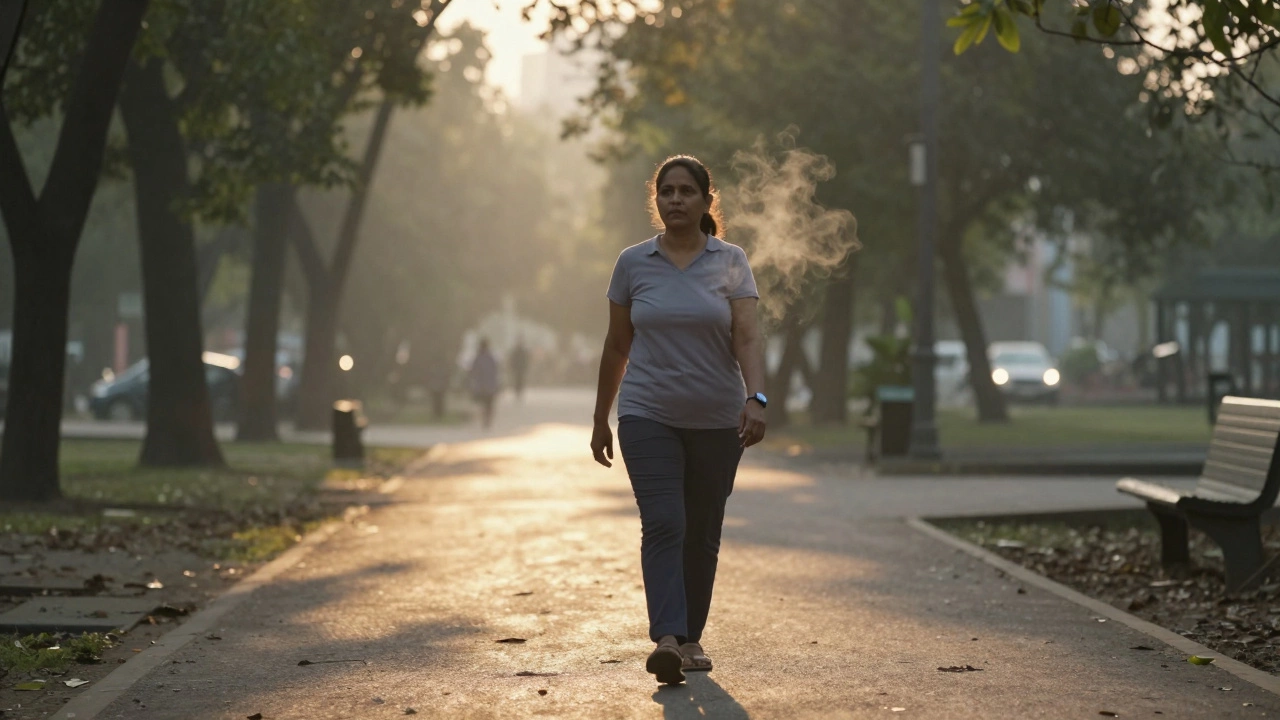
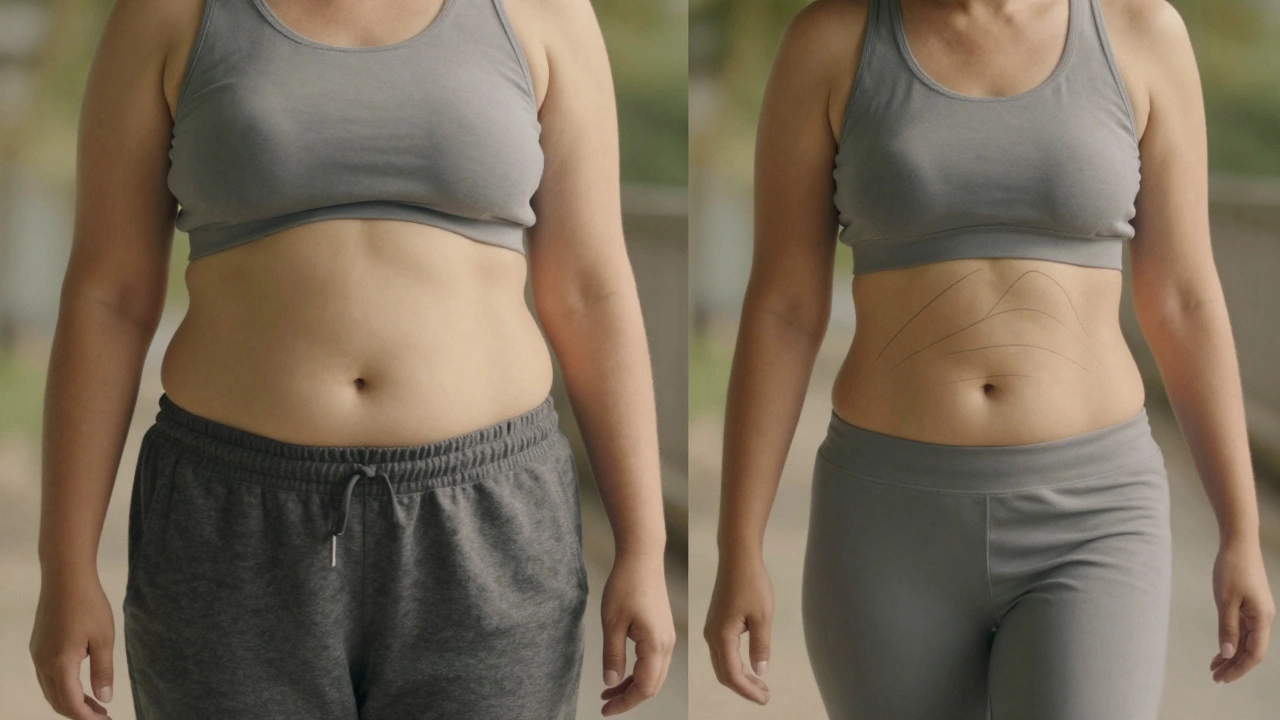
Here’s a real example: A 45-year-old woman in Bangalore, weighing 82 kg with a waist size of 94 cm, started walking 45 minutes every morning before work. She didn’t change her diet. After four months, she lost 5.8 kg, and her waist shrank to 83 cm. She didn’t feel deprived. She didn’t buy special foods. She just moved.
Walking vs. Other Workouts for Belly Fat
Is walking better than running? Not for speed-but for sustainability. Running burns more calories per minute, but most people can’t keep it up long-term. Injuries, joint pain, or boredom often stop them. Walking? You can do it for decades.
Compared to HIIT or weight training? Those build muscle and boost metabolism, which helps long-term. But if you’re starting from zero, walking is safer and easier. Many people who try HIIT burn out or get hurt. Then they quit. Walking keeps you in the game.
Best combo? Walk daily, and add two days of light strength training (bodyweight squats, resistance bands, or dumbbells). That mix burns fat and preserves muscle, which keeps your metabolism from slowing down as you lose weight.
When Walking Alone Isn’t Enough
Walking helps-but it’s not a magic bullet. If you’re eating a lot of processed carbs, sugary drinks, or fried foods, walking won’t undo that. Fat loss happens in the kitchen as much as on the pavement.
Here’s what actually works:
- Swap soda for water or unsweetened tea.
- Replace white rice with brown rice or quinoa.
- Stop eating 2 hours before bed.
- Get 7 hours of sleep. Poor sleep raises cortisol, which increases belly fat storage.
- Manage stress. Chronic stress = more belly fat. Walking itself helps here-it’s a natural stress reliever.
One woman in Hyderabad told me she walked 6,000 steps daily but still wasn’t losing belly fat. She tracked her food and realized she was drinking two glasses of sweet lassi every day. Once she cut that out, the fat started coming off in six weeks.

How to Make Walking Stick
The biggest reason people fail? They treat walking like a chore. It’s not. It’s a gift to your body.
- Walk with a friend or join a local walking group. Social pressure keeps you going.
- Use a simple pedometer or your phone. Seeing your steps rise is motivating.
- Change your route. Walk in a park, along a river, or through a market. New scenery keeps it fresh.
- Listen to podcasts or audiobooks. Make it enjoyable, not a grind.
- Don’t wait for motivation. Just put on your shoes and step out. Action comes before motivation.
Try this: Every Monday, set a weekly step goal. Friday, reward yourself with something that isn’t food-a new playlist, a massage, or a movie. Small wins build long-term habits.
What Happens If You Stop Walking?
Metabolism slows down. Muscle mass drops. Fat creeps back. Especially visceral fat. It doesn’t take long. Within three weeks of stopping, your body starts storing fat again-even if you haven’t changed your diet.
That’s why walking isn’t a temporary fix. It’s a lifestyle. You don’t need to walk 10,000 steps forever. But if you want to keep the belly fat off, you need to move regularly. Even 30 minutes a day, most days of the week, is enough to stay lean and healthy.
Walking for Belly Fat: The Bottom Line
Yes, walking burns belly fat. Not because it’s intense. But because it’s consistent. It’s low-risk. It’s doable. And it works when nothing else does.
You don’t need a gym. You don’t need a trainer. You don’t need to buy special gear. Just lace up your shoes and step outside. Start small. Stay steady. Let time do the rest.
And if you’ve tried everything else and nothing worked? Walking might be the one thing you haven’t actually given a real shot.
Can walking alone get rid of belly fat without changing my diet?
Walking helps, but it’s not enough on its own if your diet is full of sugar, refined carbs, and processed foods. Fat loss requires a calorie deficit. Walking creates that deficit, but eating clean makes it much easier. You can’t out-walk a bad diet.
How long until I see results from walking for belly fat?
Most people start noticing changes in waist size and how their clothes fit after 4-6 weeks of consistent walking (at least 5 days a week). Visible fat loss usually shows up between 8-12 weeks. Patience matters-this isn’t a quick fix, but it’s lasting.
Is walking faster better for burning belly fat?
Speed isn’t the key. Duration is. Walking at a moderate pace for 45-60 minutes burns more fat than a 20-minute power walk. Your body needs time to switch from burning sugar to burning fat. Aim for consistency over speed.
Should I walk on an empty stomach to burn more belly fat?
Walking before breakfast can help your body tap into fat stores faster, but it’s not necessary. If you feel dizzy or weak, eat a small snack first. The best walk is the one you’ll actually do. Don’t push yourself to extremes.
Can I walk too much and hurt my progress?
Yes-if you’re overtraining. Walking is low-impact, but if you’re walking 2+ hours a day, seven days a week, without rest, your body can start breaking down muscle. That slows your metabolism. Aim for 5-7 days a week, with at least one full rest day. Recovery matters.