Ayurvedic & Homeopathic Timing Calculator
Your Schedule Inputs
Ayurvedic Dose
--:--Take with warm water or milk as directed. Avoid coffee/tea during this window.
Waiting Period
-- minsAllow body to process herbal compounds. Do not consume strong flavors (mint, garlic) during this time.
Homeopathic Dose
--:--Take sublingually (under tongue). Ensure mouth is free of food residue.
You have selected potent herbs that may interact with other medications or amplify sedative effects. Please ensure your healthcare providers are aware of this combination.
No high-risk potent herbs were selected. However, always monitor your body's response when starting new combinations.
Enter your details and click "Generate Safe Schedule" to see your personalized timeline.
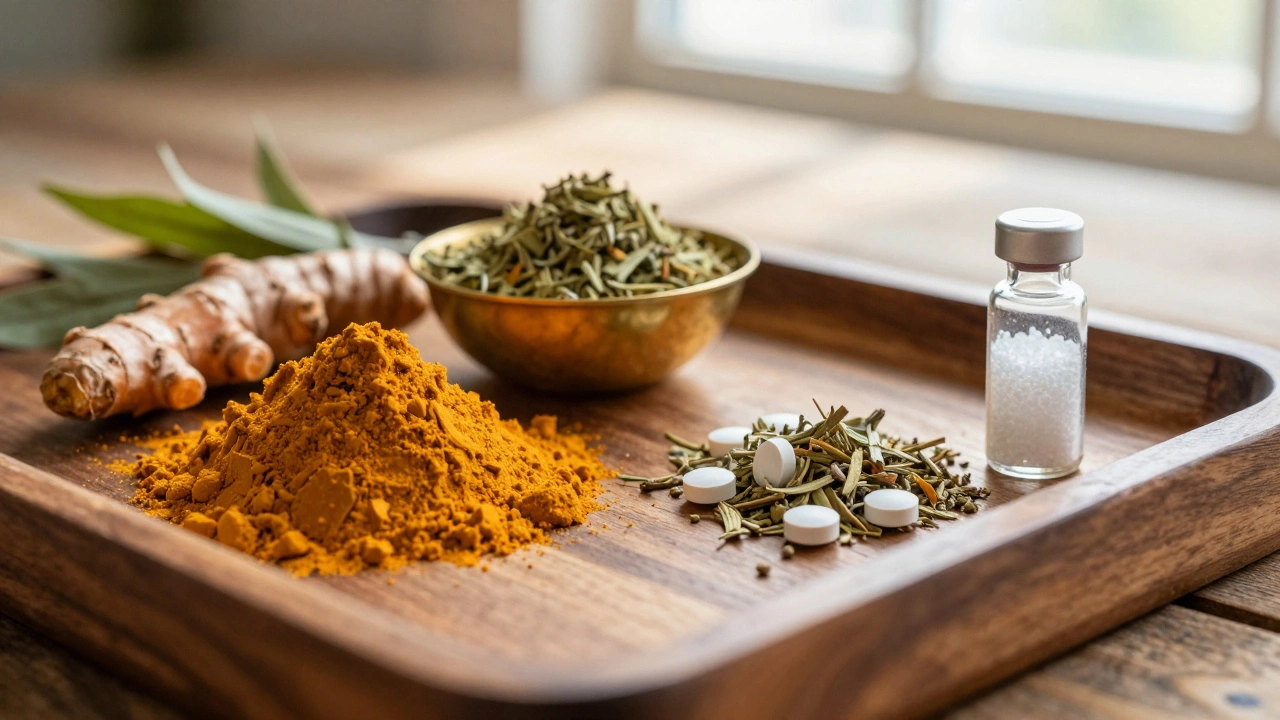
You have a jar of Ayurvedic traditional Indian herbal medicine system using plant-based formulations churna (powder) for your digestion and a bottle of homeopathic globules for your anxiety. It seems harmless enough-both are "natural," right? But mixing these two distinct systems of alternative medicine is not as simple as combining vitamin C with orange juice. While both aim to heal the body without synthetic pharmaceuticals, they operate on completely different principles, use different substances, and can interact in ways that might surprise you.
The short answer is: it depends entirely on what you are taking. Some combinations are safe and even complementary, while others can cancel each other out or cause unexpected side effects. Before you pop that next pill, let’s break down why this matters and how to do it safely.
Understanding the Fundamental Difference
To understand whether you can mix them, you first need to understand what they actually are. They are not just "herbal" vs. "water." They are philosophically opposite.
Ayurveda ancient Indian system of medicine focusing on balance of doshas through herbs, diet, and lifestyle uses tangible, physical substances. When you take an Ayurvedic remedy like Ashwagandha or Turmeric, you are ingesting actual plant matter containing bioactive compounds like withanolides or curcumin. These compounds interact with your body’s receptors, enzymes, and blood flow just like any other drug. They have mass, chemistry, and pharmacological activity.
In contrast, Homeopathy alternative medical system based on principle of like cures like using highly diluted substances relies on extreme dilution. A typical homeopathic remedy is diluted to the point where there may be zero molecules of the original substance left in the solution. The theory suggests that water retains a "memory" of the substance. From a conventional scientific standpoint, homeopathic remedies are essentially placebos because they lack active chemical ingredients to interact with biological pathways.
This distinction is crucial. Because Ayurvedic medicines contain real chemicals, they can physically interact with other substances. Homeopathic remedies, being mostly sugar pills or distilled water, rarely cause chemical interactions. However, the *timing* and *intent* of taking them together still require careful thought.
The Risk of Chemical Interactions
The primary danger when combining Ayurvedic and homeopathic treatments isn’t usually the homeopathy itself-it’s the Ayurvedic component interacting with something else. Many people assume that because Ayurvedic medicine is natural, it is inert. This is a dangerous myth.
Consider Ashwagandha adaptogenic herb used in Ayurveda for stress and energy support. It is popular for reducing cortisol levels. If you take it alongside a homeopathic remedy for insomnia, you might feel fine. But if you are also taking prescription sedatives, the Ashwagandha can amplify the drowsiness to dangerous levels. Even within the realm of alternative medicine, some Ayurvedic herbs have potent effects on liver enzymes (specifically the Cytochrome P450 system), which process drugs in your body.
For example:
- Turmeric (Curcumin): Has mild blood-thinning properties. If you combine it with other supplements that affect clotting, you increase bleeding risk.
- Guggul: Often used for cholesterol, it can interfere with how your liver processes other medications, potentially making them less effective or more toxic.
- Brahmi: Used for cognitive function, it can interact with thyroid medications and sedatives.
While the homeopathic remedy itself won’t chemically react with these herbs, the *condition* you are treating with homeopathy might overlap with the effects of the Ayurvedic herb. For instance, if you take an Ayurvedic diuretic for water retention and a homeopathic remedy for kidney support, you might dehydrate yourself faster than intended.
Timing and Absorption Strategies
If you decide to proceed with both, timing is your best friend. The goal is to allow your body to process one system before introducing the other. This minimizes the chance of competition for absorption sites in your gut.
Here is a practical schedule many practitioners recommend:
- Morning: Take your Ayurvedic herbs with warm water or milk, as directed by your practitioner. Most Ayurvedic medicines are designed to work with your digestive fire (*Agni*), so taking them on an empty stomach or with specific meals is part of their efficacy.
- Wait Period: Allow at least 30 to 60 minutes after your Ayurvedic dose before consuming anything else strong. Avoid coffee, tea, or mint during this window, as they can alter the absorption of herbal compounds.
- Afternoon/Evening: Take your homeopathic remedies. Since homeopathy is often taken sublingually (under the tongue) to bypass digestion, it doesn’t compete with food. However, keeping it separate from the heavy herbal load of the morning ensures that any subtle energetic shifts (as described in homeopathic theory) aren’t "overpowered" by the robust biochemical changes from the Ayurvedic herbs.
Never take them at the exact same moment. Swallowing a handful of Ayurvedic tablets and dissolving homeopathic pellets simultaneously creates a chaotic environment in your mouth and throat, which purists of both systems argue reduces efficacy.

When Mixing Is Actually Beneficial
There are scenarios where combining these approaches makes logical sense. This is often called "integrative medicine." The key is targeting different aspects of health.
Imagine you are recovering from a severe flu. You might use Nasya Ayurvedic nasal administration of medicated oils or powders (an Ayurvedic technique) to clear sinuses and boost immunity locally. Simultaneously, you might use a homeopathic remedy like *Oscillococcinum* for the systemic viral symptoms. Here, the Ayurvedic treatment addresses the physical congestion with tangible oils, while the homeopathic remedy targets the general feeling of malaise. They are working on different layers of your experience.
Another common combination is using Ayurveda for long-term constitution building (like improving skin quality with Neem) and homeopathy for acute, sudden issues (like a sudden allergic reaction). The slow, steady action of Ayurveda complements the rapid, targeted response sought from homeopathy.
| Feature | Ayurvedic Medicine | Homeopathic Remedy |
|---|---|---|
| Active Ingredients | Plant extracts, minerals, metals (processed) | Highly diluted substances (often no molecule remains) |
| Interaction Risk | High (can interact with drugs and other herbs) | Low (minimal chemical interaction) |
| Onset of Action | Variable (days to weeks for chronic issues) | Rapid (minutes to hours for acute issues) |
| Primary Goal | Balance Doshas (Vata, Pitta, Kapha) | Stimulate self-healing via "like cures like" |
| Regulation (India) | Ministry of AYUSH (strict manufacturing standards) | Ministry of AYUSH (separate guidelines) |
Red Flags to Watch For
Just because you can mix them doesn’t mean you should ignore your body’s signals. Pay attention to these warning signs that indicate a negative interaction or overload:
- Gastrointestinal Distress: Nausea, diarrhea, or cramping shortly after taking either remedy. Ayurvedic herbs are potent; adding another layer of treatment can irritate the gut lining.
- Worsening Symptoms: In homeopathy, a temporary worsening of symptoms is sometimes expected (called a "healing crisis"). However, if your condition genuinely deteriorates, stop both treatments and consult a doctor.
- Allergic Reactions: Rash, itching, or swelling. Ayurvedic preparations often contain multiple herbs, increasing the risk of allergen exposure compared to single-ingredient homeopathic pills.
- Dizziness or Confusion: This could indicate hypotension (low blood pressure) from certain Ayurvedic herbs combined with dehydration from other factors.

The Importance of Professional Guidance
In Bangalore, where I live, it is common to see patients visiting an Ayurvedic Vaidya in the morning and a Homeopath in the evening. While convenient, this fragmented approach lacks coordination. Your Ayurvedic practitioner needs to know about your homeopathic use, and vice versa.
An experienced Ayurvedic doctor will look at your *Prakriti* (body constitution) and prescribe herbs that align with your nature. A homeopath will focus on your mental and emotional state alongside physical symptoms. If these two professionals are not communicating, they might be pulling your body in opposite directions. For example, an Ayurvedic treatment might be heating (*Ushna*) to reduce Kapha, while a homeopathic remedy might be indicated for a "hot" temperament. Combining heat-increasing herbs with a remedy for heat sensitivity could create internal conflict.
Always disclose every supplement you take to all your healthcare providers. This includes over-the-counter painkillers, vitamins, and yes, both Ayurvedic and homeopathic medicines. Transparency prevents accidental overdosing of similar compounds.
Conclusion: Proceed with Caution and Clarity
Can you take Ayurvedic and homeopathic medicines together? Yes, but not blindly. The safety lies in understanding that Ayurveda introduces real biochemical agents into your system, while homeopathy operates on a different paradigm. By spacing out your doses, monitoring for side effects, and ensuring your practitioners are aware of your full regimen, you can harness the benefits of both traditions without risking your health. Remember, "natural" does not mean "risk-free." Treat every pill, powder, and pellet with respect and informed caution.
Is it safe to take Ayurvedic and homeopathic medicines at the same time?
It is generally safer to separate them by at least 30-60 minutes. Taking them simultaneously can lead to competition for absorption in the gut and may confuse the body's response mechanisms. Staggering doses allows each system to work effectively without interference.
Do Ayurvedic herbs interact with homeopathic remedies?
Chemically, homeopathic remedies rarely interact because they are highly diluted. However, Ayurvedic herbs are potent and can interact with other medications or supplements. The main concern is not direct interaction between the two, but rather the cumulative effect on your body's systems, such as liver processing or blood pressure.
Which should I take first: Ayurveda or Homeopathy?
Most practitioners recommend taking Ayurvedic medicines in the morning with food or warm water to aid digestion and absorption. Homeopathic remedies can be taken later in the day, away from strong flavors like coffee or mint, to ensure optimal sublingual absorption.
Are there any specific Ayurvedic herbs to avoid with homeopathy?
There are no strict prohibitions, but potent herbs like Guggul, Ashwagandha, and Brahmi should be monitored closely. These herbs have significant physiological effects. If you are using them for chronic conditions, ensure your homeopath knows, as they might adjust the potency or frequency of the homeopathic remedy.
Can I switch from Ayurveda to Homeopathy abruptly?
It is advisable to taper off Ayurvedic herbs gradually under professional guidance rather than stopping abruptly, especially if you have been taking them for a long time. Sudden cessation can lead to withdrawal-like symptoms or rebound effects depending on the herb.