
Knee Replacement Candidacy Assessment Tool
Determine if you are ready for knee replacement surgery based on functional impairment and health factors.
You’re standing up from your favorite chair, and that familiar grind stops you cold. It’s not just stiffness; it’s pain that doesn’t quit. You’ve heard whispers about knee replacement, but there’s a nagging question: Are you too young? Or maybe, are you waiting too long? The short answer is that there is no single "best" age. Instead, there is a best *time*-and that time is dictated by your quality of life, not the number on your birthday cake.
In 2026, orthopedic surgeons are shifting away from rigid age brackets. We used to tell patients under 60 to wait as long as possible because the artificial joint would wear out. Today, with better materials and surgical techniques, we look at the whole picture. If your pain is stealing your sleep, stopping you from walking the dog, or keeping you from playing with your grandkids, you might be ready now, regardless of whether you are 45 or 85.
The Myth of the "Perfect" Age
For decades, the golden rule was simple: save the metal and plastic for when you really need them. The logic was sound. A total knee arthroplasty (TKA) involves replacing the damaged cartilage and bone ends with durable implants. These implants have a lifespan. Historically, they lasted 15 to 20 years. If you had surgery at 50, you were looking at a second revision surgery by 70 or 80. Revision surgeries are harder, riskier, and often less successful than the first one.
But times have changed. Modern implants use highly cross-linked polyethylene and advanced ceramics that last significantly longer. Some studies suggest modern knees can last 25 to 30 years or more. This has lowered the barrier for younger patients. However, the clock is still ticking. The goal isn't just to survive the next decade; it's to thrive in it. So, how do doctors decide if you're ready?
Why Pain Trumps Age
If you could trade ten years of potential implant life for five years of pain-free hiking, would you do it? Most people say yes. That’s why the primary indicator for surgery is functional impairment, not chronological age.
Ask yourself these questions:
- Does pain wake you up at night despite medication?
- Can you walk 100 meters without needing to stop?
- Have non-surgical treatments failed? This includes physical therapy, weight loss, anti-inflammatory medications, and cortisone injections.
- Is the pain affecting your mental health or causing depression?
If you answered yes to most of these, you are likely a candidate. Waiting until you can barely move can actually make recovery harder. Muscle atrophy sets in when you stop using your leg due to pain. Weak muscles mean a tougher rehab process after surgery. In Bangalore, where many patients come from rural areas with limited access to consistent physiotherapy, early intervention before severe muscle loss occurs is crucial.
The Young Patient Dilemma: Under 60
Having a knee replacement in your 40s or 50s is becoming more common. Why? Because obesity rates are rising, and sports injuries are accumulating over decades. But here is the catch: younger patients are usually more active. They want to run, jump, and play tennis. A standard knee replacement is not designed for high-impact activities.
If you are under 60, your surgeon will likely discuss joint preservation procedures first. This might include:
- Osteotomy: Cutting and realigning the bone to shift weight off the damaged part of the knee.
- Partial Knee Replacement: Replacing only the worn compartment of the knee, leaving healthy ligaments intact.
These options preserve your natural tissue and buy you more time before a full replacement is needed. However, if the arthritis is widespread across the entire knee, a total replacement might be the only option. In this case, you must accept activity restrictions. No more running marathons, but plenty of swimming, cycling, and golf.

The Sweet Spot: Ages 60 to 75
This is statistically the most common window for knee replacements. Why? Because the balance of risks and benefits is optimal. Patients in this group typically have:
- Significant osteoarthritis that limits daily function.
- Good enough overall health to handle anesthesia and surgery.
- A lower activity level than younger patients, reducing wear on the new implant.
- Enough life expectancy to enjoy the benefits of pain-free mobility for 15+ years.
Recovery is also faster in this demographic compared to older adults. Muscle mass is generally higher, and comorbidities like diabetes or heart disease are often well-managed. If you fall into this age range and are struggling with pain, don’t hesitate. This is the ideal time to act.
Older Adults: Over 75
Age itself is rarely a contraindication for surgery anymore. I’ve seen 85-year-olds bounce back beautifully. The key factor here is biological age, not chronological age. Can your heart handle the stress? Do you have strong lungs? Is your blood sugar controlled?
For older patients, the decision often hinges on frailty. Frailty is a medical syndrome characterized by weakness, exhaustion, and slow walking speed. If you are frail, the risks of surgery-infection, blood clots, complications from anesthesia-may outweigh the benefits. However, if you are active and healthy, a knee replacement can be transformative. It can prevent falls, which are a leading cause of disability and death in the elderly.
In India, we see many elderly patients who delay surgery due to cultural beliefs that aging means accepting pain. This is a dangerous myth. Untreated knee pain leads to isolation and depression. If you are over 75 and active, surgery can extend your independence.
| Age Group | Primary Concern | Implant Longevity Expectation | Recommended Approach |
|---|---|---|---|
| Under 60 | Implant wear and future revision surgery | High demand, shorter relative lifespan | Joint preservation first; TKA if necessary with activity modification |
| 60 - 75 | Quality of life improvement | Optimal balance of longevity and benefit | Total Knee Arthroplasty is the gold standard |
| Over 75 | Surgical risk and frailty | Less critical due to shorter life expectancy | Evaluate biological age; proceed if fit |
Health Factors That Matter More Than Age
Your BMI (Body Mass Index) plays a huge role. Excess weight puts tremendous pressure on the knee. For every pound of body weight, the knee experiences four pounds of pressure while walking. If you weigh 200 lbs, that’s 800 lbs of force per step. Losing even 10 kg can dramatically reduce pain and improve surgical outcomes. Surgeons may ask you to lose weight before operating to reduce the risk of infection and implant failure.
Smoking is another major red flag. Nicotine constricts blood vessels, impairing healing and increasing the risk of wound complications and infection. Most surgeons will require you to quit smoking at least four weeks before surgery.
Diabetes control is critical. High blood sugar impairs immune function and healing. Aim for an HbA1c level below 7% before going under the knife. Uncontrolled diabetes significantly increases the risk of post-operative infections, which can be devastating for a joint replacement.
Recovery Realities in 2026
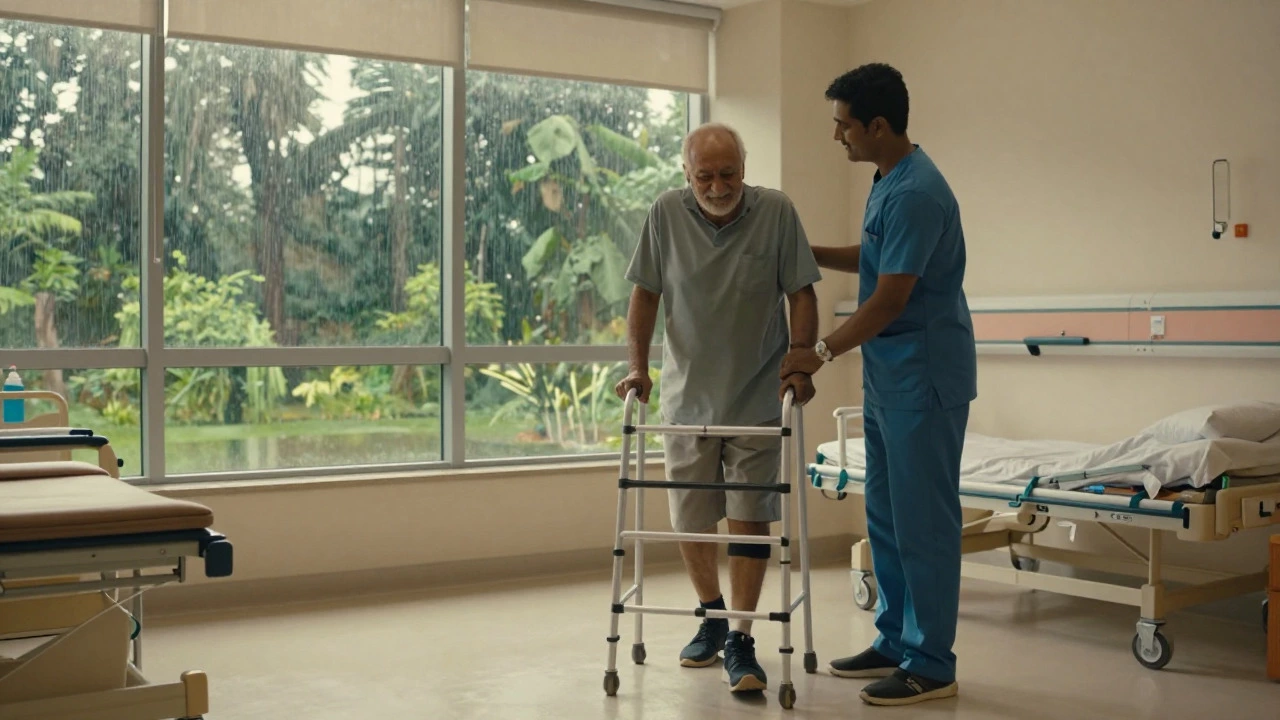
Gone are the days of weeks spent in the hospital. In top-tier hospitals in Bangalore and globally, knee replacement is often a same-day or next-day discharge procedure. You’ll go home within 24 hours. But don’t let that fool you. Recovery is a marathon, not a sprint.
Here’s what to expect:
- Weeks 1-2: Focus on pain management and getting the knee moving. You’ll use a walker or crutches. Swelling is normal.
- Weeks 3-6: Gradual return to daily activities. Driving is usually possible around week 4 if it’s your left knee, or later for the right.
- Months 2-3: Significant improvement in strength and range of motion. You can resume low-impact exercises.
- Month 6+: Full recovery. Most patients report being pain-free and returning to hobbies.
Physical therapy is non-negotiable. Your new knee is only as good as the muscles around it. Commit to your PT sessions. In India, family support is immense, but ensure you have someone to help with chores during the first two weeks.
When to Wait
Sometimes, the best advice is to hold off. If your pain is manageable with medication and lifestyle changes, and you can still work and enjoy life, surgery can wait. Consider waiting if:
- You haven’t tried conservative treatments thoroughly.
- You have uncontrolled medical conditions (heart disease, diabetes).
- You are obese and unwilling to lose weight.
- You smoke regularly.
Also, consider the season. In Bangalore, the monsoon season brings humidity and rain, which can make walking difficult during early recovery. Many patients prefer scheduling surgery in winter or spring to avoid slipping hazards.
Making the Decision
The best age for knee replacement is the age when your pain outweighs your fear of surgery. It’s a personal calculation. Talk to your orthopedic surgeon. Get a second opinion if needed. Look at the data, but listen to your body.
Don’t let myths about age keep you in pain. Whether you’re 50 or 80, technology and expertise are on your side. The goal is simple: to get you back to living life on your terms, not letting your knees dictate your days.
Is 50 too young for a knee replacement?
No, 50 is not too young if you have severe osteoarthritis and conservative treatments have failed. However, surgeons will carefully evaluate your activity levels and discuss the possibility of needing a revision surgery later in life. Joint preservation options may be explored first.
How long does a knee replacement last in a 60-year-old?
Modern knee replacements typically last 15 to 20 years, with many lasting 25+ years. For a 60-year-old, this means the implant should last through their remaining active years, potentially avoiding the need for revision surgery.
Can I walk immediately after knee replacement surgery?
Yes, most patients begin walking with assistance (walker or crutches) on the day of surgery or the next morning. Early mobilization is crucial for preventing blood clots and promoting healing.
What are the risks of knee replacement for seniors over 80?
Risks include blood clots, infection, anesthesia complications, and slower recovery. However, if the patient is biologically fit and not frail, the benefits of reduced pain and improved mobility often outweigh these risks. Pre-operative health optimization is key.
Does weight affect the success of knee replacement?
Yes, significantly. Higher BMI increases stress on the implant, leading to faster wear and higher risk of loosening. It also increases the risk of surgical complications like infection. Weight loss before surgery is strongly recommended.