Weight Loss Calorie & Protein Estimator for Women 55+
Suggested Weight Loss Calories
Based on a sustainable 500 calorie deficit from your maintenance level.
Daily Protein Target
Essential for protecting lean muscle mass during weight loss.
Quick Takeaways for Weight Loss at 55
- Most women aged 55 need between 1,200 and 1,600 calories for steady weight loss.
- Protein is non-negotiable to prevent muscle loss (Sarcopenia).
- Focus on nutrient density rather than just calorie counting.
- Strength training is the best way to "reset" a slowing metabolism.
The Reality of the 55-Year-Old Metabolism
To understand how many calories you need, we have to look at Basal Metabolic Rate (BMR), which is the amount of energy your body spends just keeping your heart beating and lungs breathing while you sleep. As you hit your mid-50s, your BMR naturally declines. This happens because of Sarcopenia, the age-related loss of skeletal muscle mass. Since muscle is more metabolically active than fat, losing it means you burn fewer calories even when you're sitting still.
Then there is the Menopause factor. The shift in hormones-specifically the drop in estrogen-often leads to a redistribution of fat toward the abdomen. This "menopausal belly" isn't just a cosmetic issue; it affects how your body handles insulin and stores energy. If you try to drop your calories too low-say, below 1,200-your body may actually fight back by slowing your metabolism even further to protect your organs.
Calculating Your Target Calories
There is no single magic number because a 5'2" woman who works from home has very different needs than a 5'9" woman who walks three miles a day. However, we can use a general framework. Most women in this age bracket fall into these ranges for weight loss for women over 50:
| Activity Level | Maintenance Calories | Weight Loss Target (Deficit) |
|---|---|---|
| Sedentary (Little to no exercise) | 1,600 - 1,800 | 1,200 - 1,400 |
| Lightly Active (1-3 days/week) | 1,800 - 2,000 | 1,400 - 1,600 |
| Moderately Active (3-5 days/week) | 2,000 - 2,200 | 1,600 - 1,800 |
To find your specific number, you can use the Mifflin-St Jeor Equation, which is widely considered the gold standard for calculating calories. You take your weight, height, and age, then multiply by an activity factor. To lose about one pound of fat per week, you typically need a deficit of 500 calories per day. But be careful: at 55, a 1,000-calorie deficit is often too aggressive and can lead to fatigue and muscle wasting.
Why Protein is Your Secret Weapon
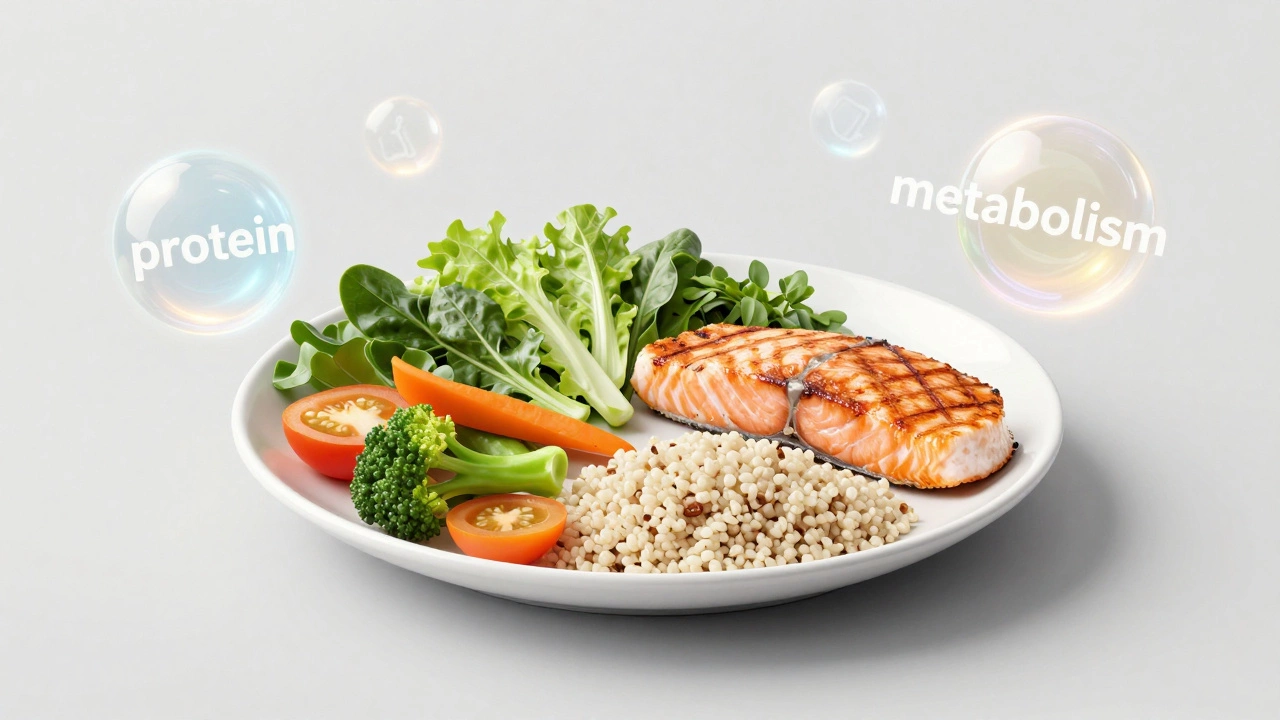
If you only count calories and ignore Macronutrients, you might lose weight, but it will be the wrong kind of weight. You want to lose adipose tissue (fat), not lean muscle. To do this, you need a high intake of protein. Aim for about 1.2 to 1.5 grams of protein per kilogram of body weight. For a 150lb woman, that's roughly 80-100 grams of protein a day.
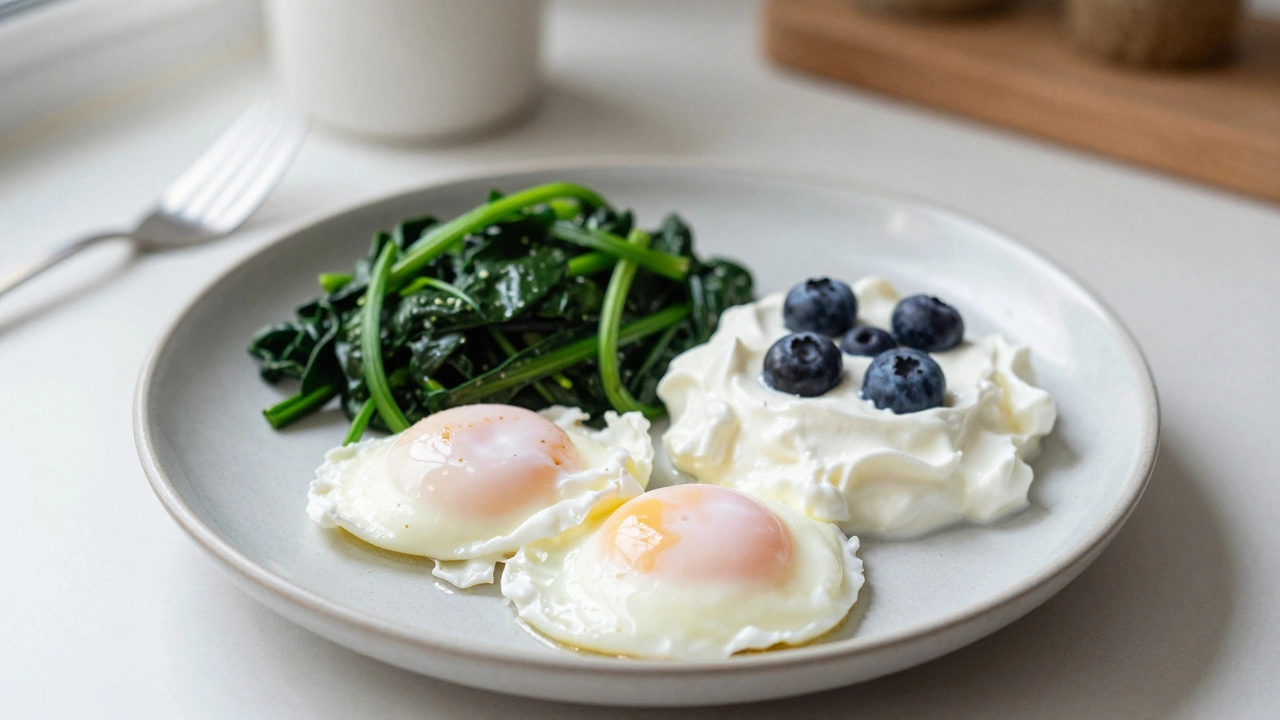
Protein does two things for you: it keeps you full longer by suppressing the hunger hormone Ghrelin, and it provides the building blocks for your muscles. Imagine eating a breakfast of plain toast versus eggs and Greek yogurt. The toast will spike your blood sugar and leave you hungry by 10 AM. The eggs provide a steady release of energy and protect your muscle mass.
Managing the "Insulin Shift" with Carbohydrates
As we age, our Insulin Sensitivity often decreases. This means your body isn't as efficient at moving sugar out of your blood and into your cells. If you eat a lot of refined carbs-white bread, sugary cereals, pasta-your body is more likely to store those calories as fat, especially around the waist.
The trick isn't necessarily to go "low carb" or "keto," which can be unsustainable and leave you feeling exhausted. Instead, switch to Complex Carbohydrates. Think quinoa, sweet potatoes, and leafy greens. These digest slowly and keep your blood sugar stable. A simple rule of thumb: make your vegetables take up half your plate, a palm-sized portion of protein a quarter, and a small fist-sized portion of complex carbs the final quarter.

Beyond the Plate: Boosting the Burn
You cannot eat your way to a fast metabolism; you have to build it. This is where Resistance Training comes in. Walking is great for your heart, but it won't stop muscle loss. Lifting weights, using resistance bands, or doing bodyweight exercises like squats and modified push-ups forces your body to maintain muscle. More muscle equals a higher BMR, meaning you can eat more calories while still losing weight.
Don't forget about sleep and stress. When you're chronically stressed or underslept, your body pumps out Cortisol. High cortisol levels are notorious for triggering cravings and promoting abdominal fat storage. If you're getting five hours of sleep and drinking four cups of coffee to stay awake, your calorie counting will be an uphill battle because your hormones are working against you.
Common Pitfalls to Avoid
One of the biggest mistakes women make at 55 is the "crash diet." Dropping to 1,000 calories might show a quick drop on the scale, but it's usually water weight and muscle. This leads to a metabolic crash, making it incredibly easy to regain the weight the moment you eat normally again. Slow and steady-aiming for 0.5 to 1 pound of loss per week-is the only way to ensure the weight stays off.
Another trap is ignoring "liquid calories." A daily latte with syrup or a glass of wine in the evening can easily add 300-500 calories to your day without making you feel full. When your calorie budget is tighter than it was in your 20s, these "hidden" calories can completely erase your deficit.
Will I lose muscle if I eat 1,200 calories?
Yes, if you don't prioritize protein and strength training. At 1,200 calories, there is a high risk that your body will break down muscle for energy. To prevent this, ensure at least 30% of those calories come from lean protein sources like chicken, fish, tofu, or legumes, and engage in resistance exercise at least twice a week.
Why is it so hard to lose weight during menopause?
Menopause causes a decline in estrogen, which changes how your body distributes fat and how it responds to insulin. Additionally, a natural loss of muscle mass lowers your resting metabolic rate, meaning you burn fewer calories doing nothing than you did ten years ago.
Should I try intermittent fasting at 55?
Intermittent fasting can be a helpful tool for some to manage their calorie window, but it's not for everyone. For women over 50, the main risk is missing protein opportunities. If you skip breakfast, you must ensure your remaining meals are protein-dense to avoid muscle loss. Consult a doctor if you have blood pressure or blood sugar issues.
Can I still eat carbs if I want to lose weight?
Absolutely. Your brain and muscles need glucose to function. The key is choosing complex carbs over simple ones. Swap white rice for quinoa or cauliflower rice, and white bread for sprouted grain bread. Focus on fibrous vegetables, which provide volume and nutrients without adding many calories.
How much water should I drink for weight loss?
Hydration is critical because thirst is often mistaken for hunger. Aim for at least 2-3 liters of water per day. Drinking a glass of water 30 minutes before a meal can help you feel fuller and prevent overeating.
Next Steps for Your Journey
If you're just starting out, don't try to change everything overnight. Start by tracking your current intake for one week without changing anything-just to see where the hidden calories are. Then, introduce one change: increase your protein at breakfast. Once that's a habit, add a 20-minute walk or a light weight-lifting session.
If you find that you're doing everything "right"-calories are on point, protein is high, and you're active-but the weight isn't moving, it might be time to visit a Weight Loss Clinic. A professional can check your thyroid levels, hormone balance, and vitamin deficiencies (like Vitamin D or B12) that could be stalling your progress.