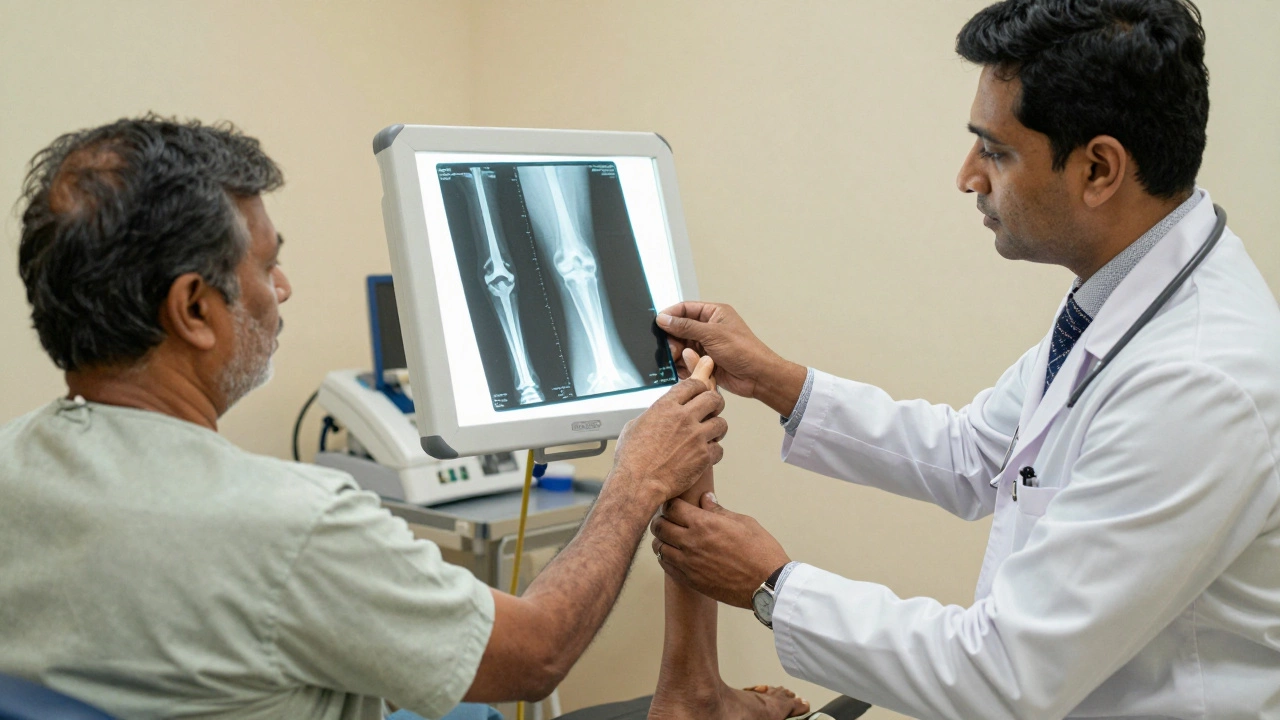
If you’re dealing with persistent joint or muscle pain, you’re not alone. Millions of people in India wake up every morning with stiffness in their knees, aching shoulders, or tight lower back muscles. But who should you actually see? Not every doctor can help you here. You need the right specialist - the one who knows exactly how bones, muscles, tendons, and nerves interact. The wrong choice can mean months of wasted time, unnecessary tests, or even worsening pain.
Orthopedic Doctors Are the Go-To for Joint and Muscle Pain
The orthopedic doctor is your best first stop for joint and muscle pain. These are the specialists trained in the musculoskeletal system - your bones, joints, ligaments, tendons, and muscles. They don’t just treat fractures. They manage chronic conditions like osteoarthritis, tendonitis, rotator cuff tears, plantar fasciitis, and even sports injuries. In cities like Bangalore, orthopedic clinics see hundreds of patients every week with exactly these complaints.
Here’s what they do differently:
- They perform physical exams that test range of motion, strength, and nerve function - not just ask you where it hurts.
- They order targeted imaging: X-rays for bone changes, MRIs for soft tissue damage like torn ligaments or muscle strains.
- They know when pain comes from the joint itself - like in knee osteoarthritis - versus when it’s referred from the spine or a nerve issue.
For example, if your shoulder pain started after lifting heavy bags, an orthopedic doctor will check for a rotator cuff tear. If your knee aches every time you climb stairs, they’ll look for cartilage wear or meniscus damage. They don’t guess. They diagnose.
When You Might Need a Rheumatologist
Not all joint pain is from wear and tear. If your pain comes with swelling, redness, morning stiffness lasting over an hour, or affects multiple joints symmetrically (like both wrists or both knees), you could be dealing with an autoimmune condition like rheumatoid arthritis, lupus, or psoriatic arthritis. That’s where a rheumatologist comes in.
Rheumatologists are internal medicine doctors who specialize in diseases of the immune system that attack joints and connective tissues. They order blood tests - like RF, anti-CCP, CRP, and ESR - that orthopedic doctors don’t typically run. If your pain isn’t getting better with rest or physical therapy, and you’ve got fatigue or fever along with it, a rheumatologist can spot patterns others miss.
In Bangalore, rheumatology clinics are growing fast. Many patients go to an orthopedic doctor first, get blood tests done, and are referred to a rheumatologist if inflammation markers are high. It’s a team approach.
Physical Therapists Are Part of the Solution - Not a Replacement
You might hear people say, “Just see a physical therapist.” That’s true - but only after you know what’s wrong. A physical therapist can’t diagnose a torn meniscus or a pinched nerve in your neck. They can’t read an MRI. But once you have a diagnosis, they’re essential.
Good physical therapists work hand-in-hand with orthopedic doctors. After an orthopedic doctor confirms you have mild osteoarthritis in your hip, the PT will design a program to strengthen your glutes and improve your walking pattern. If you have a strained hamstring, they’ll guide you through safe stretching and progressive loading. They don’t fix the injury - they help your body heal it.
Skipping the doctor and going straight to PT can delay real treatment. If you have a stress fracture and keep doing squats because your therapist said “move more,” you could turn a small crack into a full break.

What About Pain Management Specialists?
If your pain has lasted more than three months and isn’t improving, you might be referred to a pain management specialist. These are usually anesthesiologists or physiatrists with extra training in chronic pain. They use injections (like cortisone shots), nerve blocks, radiofrequency ablation, or even spinal cord stimulators.
They’re not for acute pain. If you twisted your ankle last week, you don’t need a pain specialist. But if you’ve had lower back pain for two years, tried physical therapy, took NSAIDs, and still can’t sit through a movie - then yes, this is the next step. They focus on restoring function, not just masking pain.
In India, pain clinics are still not as common as in the U.S. or Europe. But in major cities like Bangalore, Hyderabad, and Pune, you’ll find them attached to large hospitals. They’re often the last stop before surgery.
When Surgery Becomes Necessary
Not every joint problem needs surgery. But some do. If you have severe osteoarthritis where your bones are grinding together, a torn ACL that won’t heal, or a herniated disc pressing on a nerve, surgery might be the only way to get back to normal life.
Orthopedic surgeons - the surgical arm of orthopedics - perform procedures like:
- Knee or hip replacements
- Arthroscopic knee surgery
- Shoulder rotator cuff repair
- Spinal fusion or disc replacement
These aren’t minor procedures. They require precise planning. A good orthopedic surgeon will only recommend surgery after you’ve tried non-surgical options for at least 3-6 months. They’ll also show you the recovery timeline - which can be 3 to 12 months depending on the surgery.
Many patients in India delay surgery because they think it’s risky or expensive. But modern orthopedic surgery in private hospitals is safe, fast, and often covered by insurance. The real cost is staying in pain.

What to Avoid
Don’t go to a general physician for chronic joint or muscle pain. They can give you painkillers, but they won’t figure out the root cause. Don’t rely on massage therapists or chiropractors for diagnosis - they’re great for relaxation, not for treating structural damage. And don’t trust online videos that say “do this one stretch and your pain will vanish.” Joint pain is rarely that simple.
Also avoid self-diagnosing with Google. If you have pain in your fingers and read about lupus, you’ll panic. Most finger pain is from overuse or early osteoarthritis. Let a specialist tell you what’s going on.
What to Do Next
Here’s a simple plan if you’re in pain right now:
- Write down when the pain started, what makes it worse, and what helps.
- Go to an orthopedic clinic. Bring any old X-rays or reports.
- Ask: “Is this a joint problem, a muscle problem, or a nerve issue?”
- If inflammation is suspected, ask for blood tests.
- If pain lasts more than 6 weeks, ask about physical therapy or pain management.
- Only consider surgery if all other options have been tried and your quality of life is still poor.
Most people don’t need surgery. But they do need the right diagnosis. And that starts with seeing the right doctor - an orthopedic specialist who understands how your body moves, heals, and breaks down over time.