
Diabetes Medication Analysis Tool
Not every "strongest" medicine works for everyone. Based on clinical profiles, select your primary concern to see which medication class aligns best with your goals.
Maximum Glycemic Control
I need the lowest possible sugar numbers.Safety (Avoid Low Sugar)
I am worried about crashes/hypoglycemia.Heart & Weight Health
Protection against heart issues/weight loss.Medication Profiles
Long-Acting Insulin
Absolute Peak Potency
Direct replacement of pancreatic function. Most aggressive option for late-stage diabetes, but requires careful management to avoid nocturnal lows.
GLP-1 Agonists
Modern Powerhouse
Smart release of insulin when needed. Excellent for weight management and cardiovascular risk reduction with lower risk of crashing.
Sulfonylureas
Traditional Aggressive
Forcefully stimulates pancreas. Very effective at dropping sugar quickly, but lacks discrimination—often leads to dangerous lows.
SGLT2 Inhibitors
Organ Protector
Excretes glucose via kidneys. Not the strongest for sugar numbers, but incredibly powerful for preventing heart failure hospitalization.
There is a common belief among patients that there is one single "magic bullet" pill that beats every other drug for diabetes. When friends talk at family gatherings, someone often asks, "Is Insulin stronger than this syrup?" or "Which tablet lowers sugar the fastest?" The reality is much more nuanced. There is no universal "strongest" medicine for diabetes that works equally well for everyone. In medicine, the concept of strength depends entirely on how your body handles blood glucose and what complications you are trying to prevent.
If we look purely at the ability to lower blood sugar numbers quickly, Insulin is a hormone replacement therapy that mimics the pancreas's function to move glucose from the bloodstream into cells. It remains the most potent agent available. If your kidneys fail or your beta cells stop producing insulin entirely, no oral pill will work without injectable support. However, calling it the "strongest" is like calling a tank the "best vehicle" for a school run. It gets the job done with immense power, but it requires precision handling, specific storage, and carries risks like severe hypoglycemia.
Understanding What Makes a Diabetic Medication "Strong"
To understand which drug wins the potency race, we first need to define metrics. Doctors don't just look at the number on your glucometer. We primarily look at HbA1c levels. A reduction of 1.5% or more over three months is considered highly effective. Some newer medications push this even further.
When people ask about the strongest medicine, they are often looking for maximum glycemic control. However, medical guidelines prioritize two things beyond just lowering numbers: preserving kidney function and protecting the heart. For example, older pills like Sulfonylureas drop sugar rapidly but offer no protection against heart attacks and carry a higher risk of low sugar episodes. Meanwhile, newer classes like GLP-1 agonists offer slightly less raw potency on immediate sugar spikes compared to insulin, but they reduce cardiovascular death risk significantly.
The Heavyweights: Insulin Therapy
Let's talk about the absolute peak of potency. Long-acting analogues like Glargine or Detemir, combined with rapid-acting forms like Lispro or Aspart, provide total coverage. If a patient has late-stage Type 2 Diabetes where beta cell exhaustion is complete, oral agents simply cannot reach the necessary glucose threshold. You must bypass the digestive tract and go straight to the bloodstream.
However, relying solely on insulin comes with a lifestyle shift. You must count carbohydrates, monitor finger-prick tests frequently, and adjust doses based on activity. A study referenced in clinical trials from major health bodies showed that basal-bolus insulin regimens reduced HbA1c by an average of 3.0% compared to 1.5% for oral monotherapies. That is significant. Yet, this comes with a distinct side effect profile: weight gain and nocturnal hypoglycemia.
The Modern Powerhouses: GLP-1 Agonists
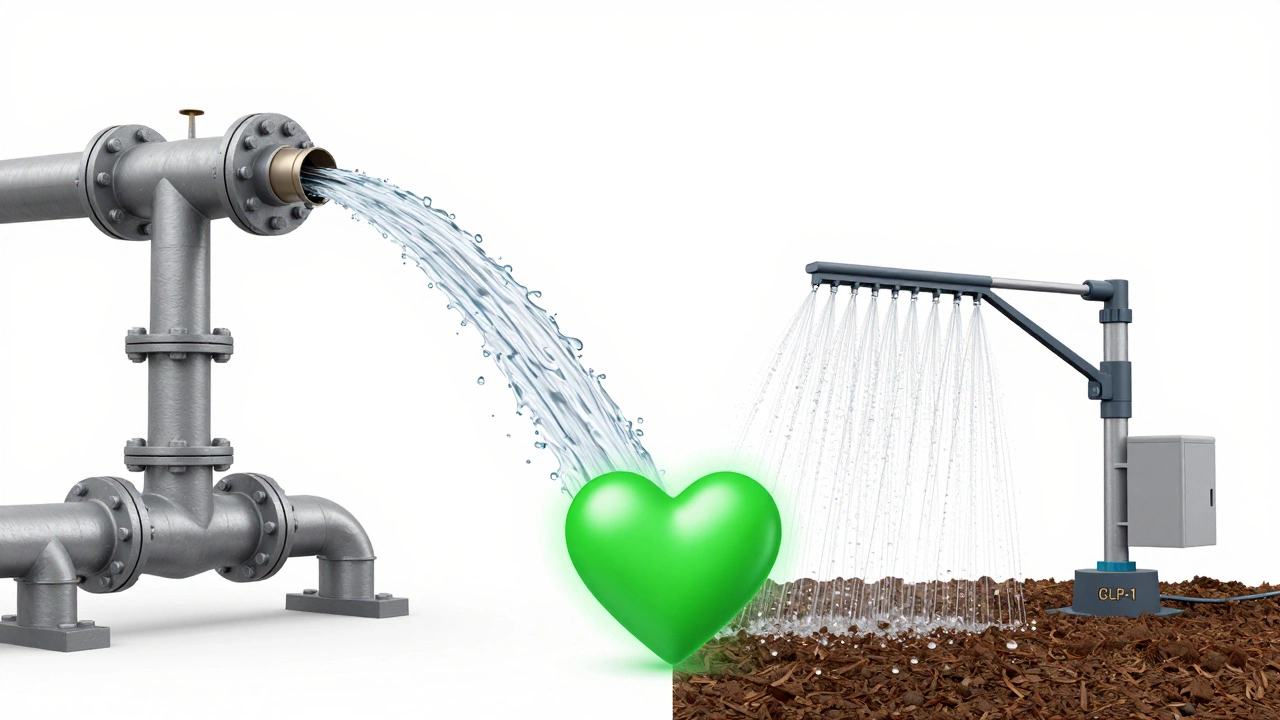
In the last decade, semaglutide and liraglutide have changed the conversation. These belong to a class called glucagon-like peptide-1 receptor agonists. They work by stimulating insulin release only when blood sugar is high, slowing gastric emptying, and reducing appetite. While insulin acts like a fire extinguisher blasting water everywhere, GLP-1s act more like a smart sprinkler system targeting specific triggers.
| MEDICATION CLASS | MECHANISM OF ACTION | AVERAGE HBA1C REDUCTION | RISK OF HYPOGLYCEMIA |
|---|---|---|---|
| Long-Acting Insulin | Direct glucose uptake facilitation | 1.5% - 3.0% | High |
| GLP-1 Agonists | Incretin enhancement & slowed digestion | 1.0% - 1.8% | Low |
| Sulfonylureas | Direct pancreatic stimulation | 0.5% - 1.5% | High |
| SGLT2 Inhibitors | Kidney glucose excretion | 0.5% - 1.0% | Very Low |
If you look at the table above, notice the difference in safety. GLP-1 agonists like Semaglutide show robust results. Clinical data indicates these drugs can lead to significant weight loss, a massive benefit for many Type 2 diabetic patients who struggle with obesity-related insulin resistance. But does this make them stronger? In terms of pure sugar lowering numbers, Insulin still wins. In terms of overall health outcomes (heart + weight + sugar), the scales have tipped toward the newer injectables.
The Older Heavyweights: Sulfonylureas
Many doctors in India have historically prescribed Gliclazide, Glimepiride, or Glibenclamide due to their availability and cost-effectiveness. These drugs stimulate the pancreas to pump out whatever insulin is left inside. They are inexpensive and very aggressive in dropping glucose. You can achieve normal readings within days of starting.
The problem here is the lack of discrimination. Even if your blood sugar drops dangerously low after dinner, the drug continues to force insulin production. This increases the risk of falling asleep during hypoglycemic episodes, which can cause strokes. Because of this risk profile, newer guidelines suggest these are no longer the first choice for "strength," despite their potency. They are considered more powerful than Metformin, but far less safe than the newer options.
Why "Strongest" Is Often the Wrong Question
I often see patients come in demanding the strongest medicine because their HbA1c was 9.5%. They want the number fixed immediately. But diabetes management is not a sprint; it's a marathon involving long-term organ preservation. If you put a person on the most potent sulfonylurea without considering their kidney function, you risk renal failure. If you prescribe maximum dose insulin to a thin patient who doesn't eat enough calories, they crash.
This brings us to individual variability. Genetic makeup plays a role in how drugs metabolize. CYP450 enzymes in the liver vary between individuals. Two people taking the exact same brand of Glimepiride might have drastically different sugar profiles. One might be under-dosed, the other overdosed. Furthermore, if a patient has chronic kidney disease (CKD), the standard "strong" drugs become toxic. In such cases, the doctor switches to a regimen dependent on non-renal clearance pathways.
Evaluating Cardiovascular Protection
In 2026, the definition of a good diabetes drug includes proof of heart safety. Several large-scale trials have established that certain medications protect the heart and arteries. This is where SGLT2 Inhibitors like Empagliflozin shine. They aren't the strongest at lowering HbA1c, but they are incredibly strong at preventing heart failure hospitalization. For a patient with known coronary artery disease, this drug becomes "stronger" in its protective capability, even if its sugar-lowering power is moderate.
Combination therapy is the new gold standard for those needing maximum impact. A common stack involves Metformin for sensitivity, a GLP-1 for secretion control, and basal insulin for the baseline gap. This allows each drug to work at a lower, safer dose while maximizing the overall effect.
Lifestyle: The Invisible Multiplier
No medicine works well without a dietary anchor. If you consume 300 grams of carbs a day, even insulin might struggle. Reducing carb intake acts as a multiplier for your medication's effectiveness. Think of the medicine as the engine and diet as the fuel quality. High-octane fuel makes even a small engine perform better. Many patients report their sugar control improves significantly simply by shifting to high-fiber diets and intermittent fasting protocols alongside standard medication.
Furthermore, sleep quality affects cortisol levels. High stress leads to high cortisol, which causes blood sugar to spike regardless of the pill taken. So, the strongest medicine for one person might involve treating their sleep apnea or stress management before adding another injection.
Is Insulin really the strongest diabetes medicine?
Yes, biologically speaking, insulin is the most potent agent for lowering blood glucose because it directly facilitates sugar entry into cells. No other class of drug can lower sugar levels as aggressively or universally across all stages of diabetes.
Can I start with the strongest medicine immediately?
Doctors typically start with safer options like Metformin to gauge response. Starting with high-potency drugs like insulin or Sulfonylureas too early can cause dangerous drops in sugar. Titration is key to safety.
Are newer GLP-1 injections better than old pills?
GLP-1s often offer better comprehensive benefits including weight loss and heart protection. However, they are generally more expensive than older oral pills like Metformin or Gliclazide, making cost a deciding factor.
Does weight affect medication strength?
Yes. Higher Body Mass Index (BMI) often correlates with greater insulin resistance. Heavier patients may require stronger dosages or combination therapies to achieve the same blood sugar targets as thinner patients.
What are the risks of the strongest diabetes meds?
The primary risk is hypoglycemia (low blood sugar), leading to confusion, seizures, or coma. Others include weight gain with insulin and potential gastrointestinal side effects with newer injectables.
Finding Your Personal Best Solution
Ultimately, the strongest medicine for diabetes is the one you can tolerate consistently for the long term without crashing your blood sugar. While the charts suggest Insulin has the highest potency ceiling, the "winner" changes depending on your budget, your kidney health, your weight goals, and your lifestyle discipline. Work closely with an endocrinologist to find the combination that keeps you safe while keeping your levels tight.