IVF Reality Check: Cost & Success Estimator
This tool helps you visualize the financial commitment and realistic statistical odds associated with a single IVF cycle. Remember, these are estimates based on average data from major Indian cities as cited in the article.
Estimated Live Birth Rate
Enter your age to see statistics.
Estimated Total Cost (INR)
Physical Reality Check: Expect 10-14 days of daily injections (up to 4/day). Monitor for OHSS symptoms like bloating or weight gain.
You’ve heard the stories. Your friend got pregnant after three cycles. Your cousin had twins on her first try. It sounds straightforward: inject, retrieve, transfer, baby. But if you are staring at a calendar full of appointment slots and wondering why nobody warned you about the emotional rollercoaster or the specific physical toll, you are not alone. IVF is a complex assisted reproductive technology that involves fertilizing an egg with sperm outside the body and then transferring the embryo into the uterus. While it is one of the most effective treatments for infertility, the reality often differs sharply from the glossy brochures in clinic waiting rooms.
Most people go in expecting a medical procedure. What they get is a lifestyle overhaul that lasts several weeks per cycle. Let’s cut through the noise and talk about what actually happens behind closed doors-the side effects, the financial strain, and the psychological weight that no doctor has time to explain during a fifteen-minute consultation.
The Physical Reality Is More Than Just Injections
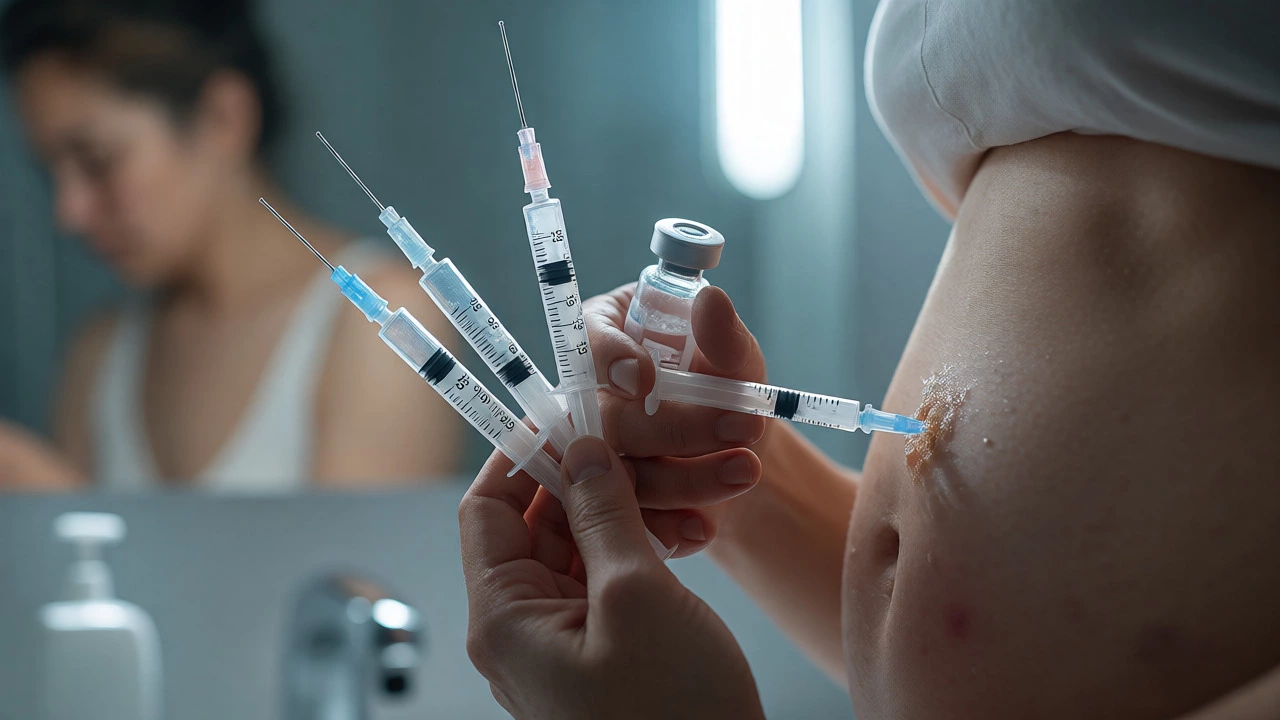
People often underestimate the sheer volume of medication involved. It isn’t just one shot before bed. Depending on your protocol, you might be administering two different types of hormones twice a day. For some women, this means four injections daily for ten to fourteen days. Yes, you read that right. Four needles, every single day, plus oral medications like progesterone pills that can make you feel bloated, foggy, and emotionally volatile.
Ovarian Hyperstimulation Syndrome (OHSS) is a complication caused by excessive response to fertility drugs, leading to swollen, painful ovaries and fluid retention. Mild OHSS affects up to 20% of IVF cycles. You might gain five to ten kilograms in water weight within a week. Your abdomen feels tight, like you’re wearing a corset that’s two sizes too small. This isn’t just discomfort; it can limit your mobility and sleep quality significantly.
Then there is the egg retrieval itself. It’s a surgical procedure, usually done under sedation. You wake up with soreness similar to intense menstrual cramps, but localized more deeply. Some patients report shoulder pain due to the gas used during the ultrasound-guided needle insertion. And let’s not forget the post-retrieval period where you are strictly advised against heavy lifting or strenuous exercise to prevent ovarian torsion-a twisting of the ovary that requires emergency care.
The Emotional Whiplash Nobody Prepares You For
The "two-week wait"-the time between embryo transfer and the pregnancy test-is notoriously difficult. But the emotional toll starts much earlier. Hormonal fluctuations don’t just affect your body; they mess with your brain chemistry. Many women describe feeling like they have severe premenstrual syndrome (PMS) multiplied by ten. You might cry over a commercial, snap at your partner for loading the dishwasher incorrectly, or feel a sudden wave of hopelessness while brushing your teeth.
It’s crucial to understand that these feelings are chemically induced. They aren’t signs of weakness. However, society expects you to remain stoic and hopeful. When a cycle fails, the grief can be profound. You aren’t just mourning a potential baby; you are mourning the loss of control, the wasted effort, and the financial investment. Psychologists specializing in fertility often note that the stress of IVF can rival that of a cancer diagnosis. Yet, unlike cancer, there is no clear endpoint or support group structure readily available for everyone.

The Financial Black Hole
In many countries, including parts of India and the US, IVF is expensive. A single cycle in Bangalore, for instance, can range from ₹1.5 lakh to ₹3 lakh depending on the clinic and medications. But here is the catch: the quoted price rarely covers everything. Add-ons like ICSI (Intracytoplasmic Sperm Injection), PGT-A testing (genetic screening of embryos), or freezing additional eggs add thousands more.
And what if the first cycle doesn’t work? Statistically, the success rate per fresh transfer varies by age. For women under 35, it’s roughly 40-50%. Over 40, it drops significantly. This means many couples need multiple cycles. If you need three cycles, your initial budget needs to triple. Insurance coverage is inconsistent. In India, most private insurance policies exclude fertility treatments entirely. This creates a unique stressor: deciding whether to continue treatment based on bank balances rather than medical advice.
| Component | Average Cost (INR) | Notes |
|---|---|---|
| Consultation & Monitoring | ₹15,000 - ₹25,000 | Includes ultrasounds and blood tests |
| Medications | ₹60,000 - ₹90,000 | Varies heavily by dosage and brand |
| Egg Retrieval & Lab Work | ₹80,000 - ₹1,20,000 | Standard IVF vs. ICSI adds cost |
| Embryo Transfer | ₹20,000 - ₹40,000 | Fresh or Frozen |
| Optional: PGT-A Testing | ₹1,00,000 - ₹1,50,000 | Per batch of embryos |
Success Rates Are Not Linear
Clinics love to advertise high success rates, but you need to know how they calculate them. Do they mean clinical pregnancy rate? Live birth rate? Per started cycle or per transfer? These numbers can differ wildly. A 70% success rate might sound great, but if it refers to biochemical pregnancies (early losses) rather than live births, it’s misleading.
Age is the biggest factor. At 30, your chance of having a healthy baby per cycle is decent. At 42, it’s less than 10%. This disparity leads to the "chasing" phenomenon, where older patients undergo multiple failed cycles hoping for a miracle. Genetic testing (PGT-A is Preimplantation Genetic Testing for Aneuploidies, which screens embryos for chromosomal abnormalities before transfer) can help reduce miscarriage rates in older patients, but it doesn’t guarantee a euploid (chromosomally normal) embryo will be found. Sometimes, all embryos are abnormal, leaving you with nothing to transfer despite successful fertilization.

The Relationship Strain
Infertility treatments turn intimacy into a scheduled task. Sex becomes timed to trigger shots. Romance gets replaced by logistics: who picks up the meds, who drives to the scan, who pays the bill. Partners may cope differently-one might become hyper-focused on solutions, while the other withdraws emotionally. This divergence can create resentment if not communicated openly.
Consider setting aside "non-fertility" time. Go out without talking about appointments or results. Remind yourselves why you are doing this. Therapy, specifically counseling for couples dealing with infertility, can provide tools to navigate this pressure cooker. It’s not a sign of failure; it’s maintenance for your relationship.
What Clinics Don’t Always Say About Lifestyle Changes
You’ll hear advice about losing weight, quitting smoking, and taking supplements. While valid, clinics sometimes imply these changes guarantee success. They don’t. You can do everything "right"-eat organic, exercise moderately, take CoQ10 and Vitamin D-and still fail. Conversely, someone with PCOS who hasn’t lost weight might succeed. Biology is messy. Don’t blame yourself for outcomes beyond your control.
However, specific actions do improve odds slightly. Maintaining a BMI between 19 and 25 helps with medication dosing and retrieval ease. Avoiding NSAIDs (like ibuprofen) around the time of ovulation and transfer is critical as they can interfere with implantation. Sleep hygiene matters more than you think; cortisol levels from poor sleep can impact hormonal balance.
How long does a typical IVF cycle take?
A standard IVF cycle takes about 4 to 6 weeks from the start of stimulation to the pregnancy test. This includes 10-14 days of hormone injections, monitoring scans, the retrieval procedure, lab fertilization time (3-5 days), and the two-week wait after transfer.
Is IVF painful?
The injections themselves cause mild stinging. The egg retrieval is performed under sedation, so you shouldn't feel pain during the procedure, though cramping afterward is common. Embryo transfer is generally painless, similar to a Pap smear.
Why do some cycles fail even with good embryos?
Implantation depends on both embryo quality and uterine receptivity. Even a genetically normal embryo might fail due to issues with the endometrial lining, immune factors, or simple biological chance. There is no single reason for failure in many cases.
Can I work during IVF?
Many people work, but you will need flexibility for frequent morning appointments (blood draws and ultrasounds). Fatigue and bloating from medication can also affect productivity. Planning ahead with your employer is advisable.
What happens to unused embryos?
Unused viable embryos are typically frozen for future use. You can choose to use them later, donate them to science or another couple, or discard them. Storage fees apply annually, so consider the long-term costs.