Blood Test Value Checker
Check Your Blood Test Results
Enter your blood test values below to see if they're within normal ranges and understand what they mean.
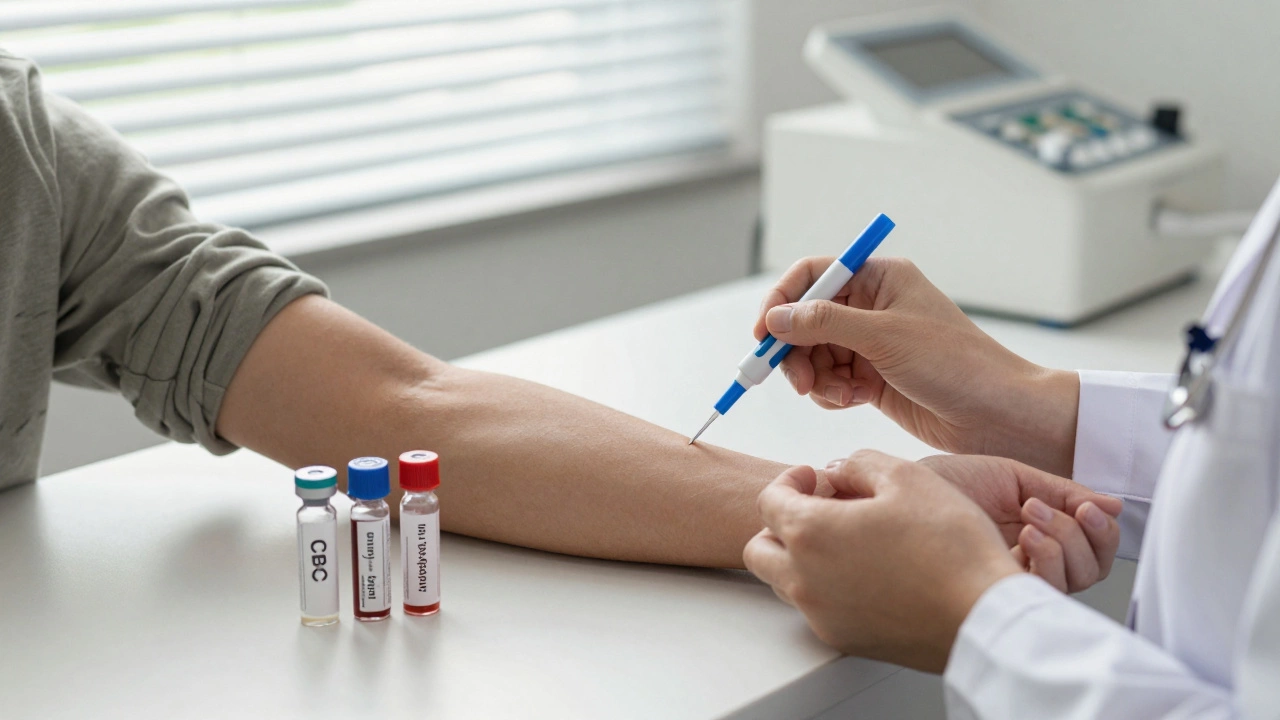
When doctors recommend a full body blood test, it’s not just one test-it’s a group of tests designed to give you a snapshot of your overall health. Many people think it’s a single needle prick with a quick answer, but it’s actually a detailed look at how your body is functioning from the inside. If you’ve been told to get one, or you’re considering it as part of a yearly checkup, here’s exactly what you’re signing up for.
Basic Blood Count: The Foundation
The cornerstone of any full body blood test is the Complete Blood Count, or CBC. This one test tells your doctor about your red blood cells, white blood cells, and platelets. Red blood cells carry oxygen-if they’re low, you might feel tired all the time. High numbers could mean dehydration or a condition like polycythemia. White blood cells are your immune system’s soldiers. If they’re too high, your body might be fighting an infection. Too low, and you could be more vulnerable to illness. Platelets? They help with clotting. A low count can lead to easy bruising; a high count might increase your risk of clots.
A CBC doesn’t just say "normal" or "abnormal." It gives numbers: hemoglobin levels, hematocrit percentage, mean corpuscular volume (MCV), and more. For example, a hemoglobin level below 13.5 g/dL in men or 12.0 g/dL in women often signals anemia. These numbers aren’t just labels-they’re clues.
Metabolic Panel: How Your Body Processes Energy
The Basic Metabolic Panel (BMP) or Comprehensive Metabolic Panel (CMP) checks how your body handles sugar, salt, fluids, and waste. It includes eight to 14 different measurements. Glucose levels tell you if your blood sugar is in a healthy range. A fasting glucose above 100 mg/dL might point to prediabetes. Sodium and potassium levels show your electrolyte balance-too much or too little can mess with your heart rhythm or muscle function.
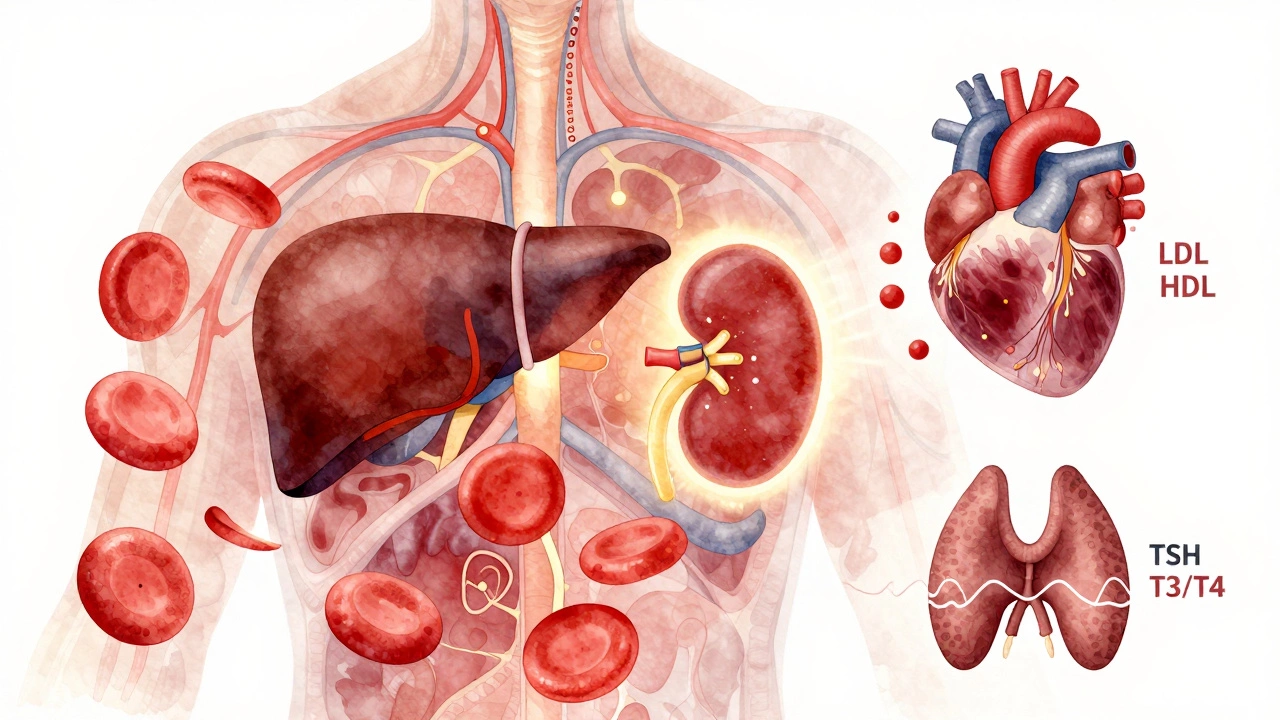
One of the most important parts of this panel is kidney function. Creatinine and blood urea nitrogen (BUN) levels tell you how well your kidneys are filtering waste. If creatinine is over 1.2 mg/dL for men or 1.1 mg/dL for women, it could mean your kidneys aren’t working as they should. Liver enzymes like ALT and AST are also measured. A spike in ALT, for instance, can signal liver stress from alcohol, medication, or fatty liver disease.
Lipid Panel: Your Cholesterol Story
Most people know cholesterol is important, but few understand what the numbers really mean. A lipid panel measures four things: total cholesterol, LDL (bad cholesterol), HDL (good cholesterol), and triglycerides. Healthy numbers? Total cholesterol under 200 mg/dL, LDL under 100 mg/dL, HDL above 60 mg/dL, and triglycerides under 150 mg/dL.
But here’s what most don’t realize: HDL isn’t just "good"-it’s protective. If your HDL is below 40 mg/dL for men or 50 mg/dL for women, your risk for heart disease goes up. Triglycerides matter too. If they’re over 200 mg/dL, it’s often tied to diet, inactivity, or insulin resistance. This panel isn’t about fear-it’s about prevention. High cholesterol doesn’t cause symptoms, but it silently increases your risk of heart attack or stroke.
Thyroid Function: The Metabolism Master
Your thyroid controls your energy, weight, mood, and temperature. A full body blood test usually includes TSH (thyroid-stimulating hormone), T3, and T4. TSH is the first indicator. If it’s high (above 4.5 mIU/L), your thyroid might be underactive. If it’s low (below 0.4 mIU/L), you might have an overactive thyroid.
Many people feel tired, gain weight, or get cold easily and assume it’s just aging. But if your TSH is off, it’s treatable. A simple pill can bring your thyroid back into balance. Not getting this tested means you might be missing the real reason behind symptoms that feel "normal."
Diabetes and Insulin Markers: Beyond Glucose
While glucose is part of the metabolic panel, some full body tests go further with HbA1c (glycated hemoglobin). This test shows your average blood sugar over the past two to three months. A level below 5.7% is normal. Between 5.7% and 6.4% means prediabetes. At 6.5% or higher, it’s diabetes.
Why does this matter? Two out of three people with prediabetes don’t know they have it. And once diabetes sets in, damage to nerves, kidneys, and eyes can already be happening. HbA1c doesn’t require fasting. It’s a more accurate picture than a single glucose reading.
Inflammation and Immune Health: CRP and More
Chronic inflammation is behind many diseases: heart disease, arthritis, even depression. That’s why many full body panels now include C-reactive protein (CRP). Normal CRP is under 1 mg/L. Between 1 and 3 mg/L means moderate risk for heart disease. Above 3 mg/L? High risk.
Some labs also test for vitamin D, iron, ferritin, and B12. Vitamin D deficiency is shockingly common-even in sunny places. Levels below 20 ng/mL are considered deficient. Iron and ferritin tell you if you’re at risk for anemia, even if your CBC looks okay. B12 is critical for nerve function. Low levels can cause tingling, memory issues, or fatigue that’s mistaken for stress.
What’s Not Usually Included
Not every blood test is part of a standard full body panel. Hormones like testosterone, estrogen, or cortisol are often separate. Cancer markers (like PSA or CA-125) aren’t routine unless you’re at higher risk. Genetic tests? Those are completely different and usually not part of a standard screening.
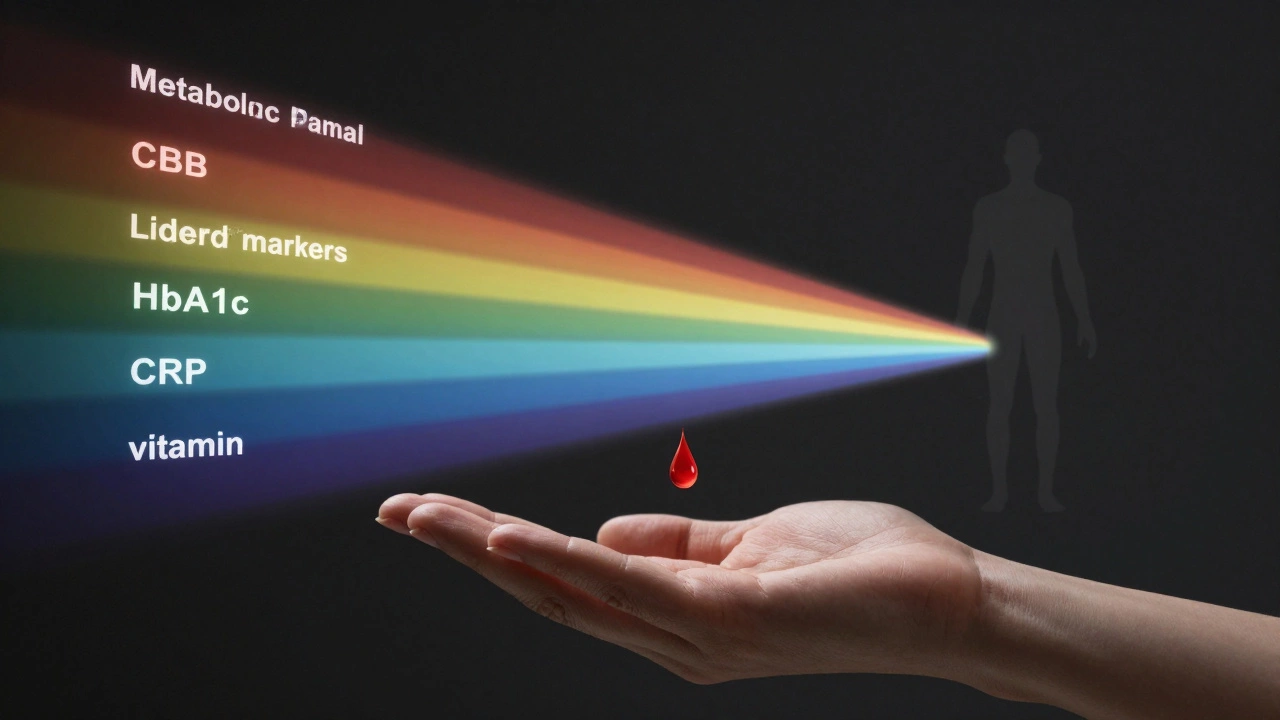
Some clinics upsell extra tests that aren’t medically necessary. A full body blood test doesn’t need to include 50 different markers. Stick to the core: CBC, metabolic panel, lipid panel, thyroid, HbA1c, CRP, and key vitamins. Anything beyond that should be based on your symptoms or family history.
How to Prepare
Most full body blood tests require fasting for 8-12 hours. Water is fine. Coffee? Skip it. Even black coffee can affect glucose and cortisol levels. If you’re taking medications, ask your doctor. Some-like statins or thyroid meds-might need to be held temporarily.
Drink water before your appointment. Dehydration makes veins harder to find and can skew results. Wear a short-sleeve shirt. The whole process takes less than five minutes. Results usually come back in 24 to 72 hours.
What Happens After?
Getting your results isn’t the end-it’s the start. Don’t just look at the numbers. Ask: "What does this mean for me?" A single abnormal value doesn’t always mean disease. Stress, recent illness, or even lack of sleep can affect results. Your doctor will look at patterns across all tests.
If your cholesterol is high, you might need dietary changes-not pills. If your vitamin D is low, a supplement and 15 minutes of sun daily could fix it. If your HbA1c is borderline, losing 5-10% of your body weight can reverse prediabetes.
Don’t ignore normal results either. If everything looks fine, that’s good news. But it doesn’t mean you’re invincible. A clean blood test today doesn’t protect you from poor habits tomorrow.
Who Needs This Most?
Anyone over 35 should get a full body blood test at least once a year. If you have a family history of diabetes, heart disease, or thyroid issues, start earlier. People with obesity, high blood pressure, or sedentary lifestyles benefit the most. Even if you feel fine, silent conditions like fatty liver or early kidney damage can show up here.
It’s not about fear. It’s about awareness. This test doesn’t diagnose cancer or brain tumors. But it finds the hidden problems that, if left alone, lead to bigger ones.