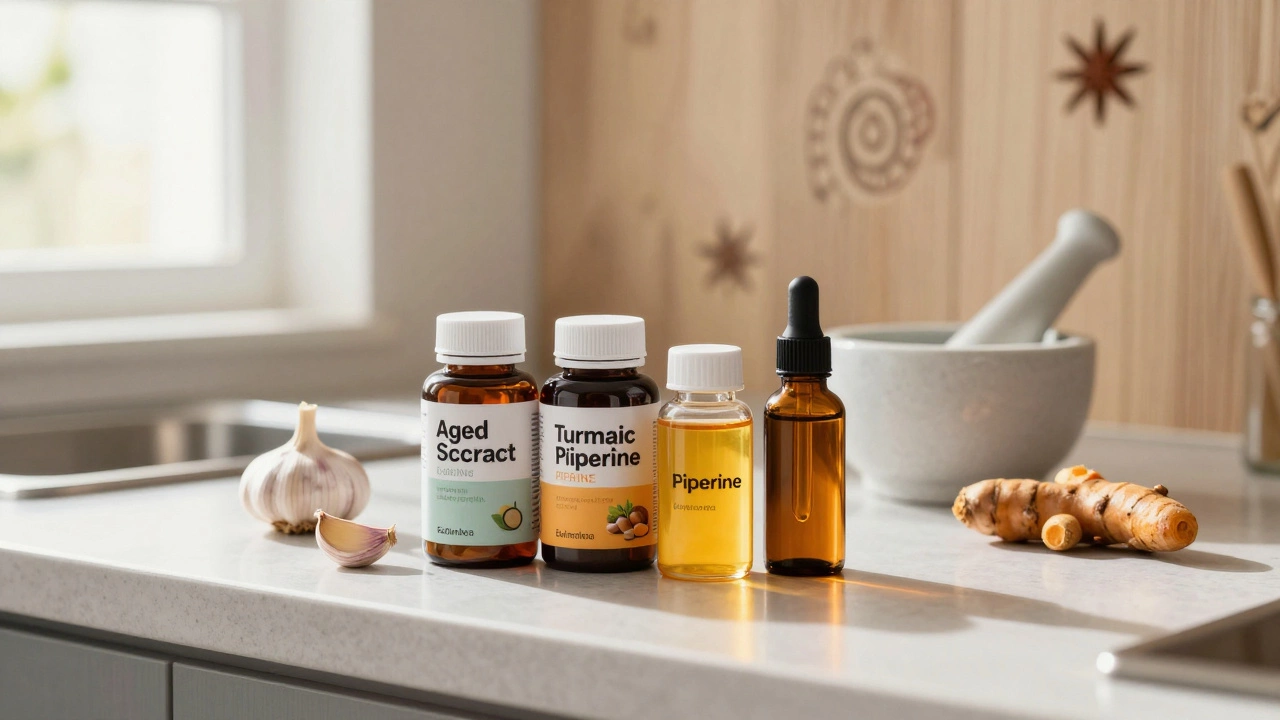
Herbal supplements aren’t just something your grandma took. Millions of people around the world use them daily - not as magic pills, but as everyday support for energy, sleep, digestion, and immunity. If you’ve ever wondered what’s actually in those bottles on the shelf, here’s a clear look at real examples, how they’re used, and what science says about them.
Garlic: More Than a Kitchen Staple
Garlic isn’t just for flavoring curry or pasta. Raw garlic has allicin, a compound that kicks in when you crush or chop it. People take garlic supplements to help keep blood pressure in check. A 2020 review of 12 clinical trials found that garlic supplements lowered systolic blood pressure by an average of 8-10 mmHg in people with high blood pressure. That’s similar to the effect of some mild prescription drugs - but without the side effects. Most supplements use aged garlic extract because it’s gentler on the stomach and still delivers the benefits.
Turmeric and Curcumin: The Anti-Inflammatory Powerhouse
Curcumin is the active ingredient in turmeric, the bright yellow spice common in Indian cooking. It’s been studied for its ability to reduce inflammation - the root cause of many chronic conditions. One 2021 study in patients with osteoarthritis showed that taking 1,000 mg of curcumin daily for 8 weeks reduced pain and stiffness as effectively as ibuprofen. But here’s the catch: curcumin doesn’t absorb well on its own. That’s why most quality supplements include piperine (from black pepper), which boosts absorption by up to 2,000%. Look for products labeled “curcumin with piperine” if you want real results.
Ashwagandha: The Adaptogen for Modern Stress
If you’re constantly tired, wired, or emotionally drained, ashwagandha might be the supplement you didn’t know you needed. It’s an adaptogen - a plant that helps your body handle stress. In a 2019 double-blind trial, adults who took 240 mg of ashwagandha daily for 60 days reported 69% less stress and 28% lower cortisol levels compared to the placebo group. It’s also linked to better sleep and improved focus. Most people take it in capsule form, either in the morning or before bed, depending on how their body responds. Some feel energized; others feel calmer. Start low and see how you react.
Echinacea: The Cold Fighter With Mixed Results
Echinacea has been marketed as a cold cure for decades. The truth? It doesn’t prevent colds. But it might shorten them. A 2014 analysis of 14 studies found that people who took echinacea at the first sign of a cold recovered about 1.4 days faster on average. The best results come from using the above-ground parts of the purple coneflower plant, not the roots. Look for supplements labeled “Echinacea purpurea” and avoid those with fillers like maltodextrin. It’s not for everyone - people with autoimmune conditions or allergies to ragweed should skip it.

Ginseng: Energy Without the Crash
There are two main types: Asian (Panax) and American (Panax quinquefolius). Asian ginseng is more stimulating and often used for mental focus and physical stamina. American ginseng is calmer and better for immune support. In a 2022 trial, healthy adults who took 200 mg of Asian ginseng daily for 8 weeks reported improved reaction time and reduced mental fatigue during demanding tasks. It’s not caffeine. It doesn’t spike your heart rate. Instead, it helps your body use energy more efficiently. Most people take it in the morning. Don’t mix it with stimulants - it can overdo it.
St. John’s Wort: The Natural Mood Support
St. John’s Wort is one of the most researched herbal supplements for mild to moderate depression. Multiple studies, including a 2023 meta-analysis in the British Medical Journal, found it as effective as low-dose SSRIs for depression - with fewer side effects like weight gain or sexual dysfunction. But here’s the warning: it interacts with almost every prescription drug. Birth control pills, blood thinners, antidepressants, even some heart medications - St. John’s Wort can make them fail. Never take it without talking to your doctor, especially if you’re on any regular meds.
Milk Thistle: Liver Support You Can Trust
If you drink alcohol occasionally, take painkillers regularly, or just want to give your liver a break, milk thistle is worth considering. Its active compound, silymarin, protects liver cells and helps regenerate them. A 2021 study on people with non-alcoholic fatty liver disease showed that 140 mg of silymarin taken three times a day improved liver enzyme levels and reduced fat buildup in the liver after 6 months. It’s not a detox miracle - but it’s one of the few herbs with solid, repeatable data supporting liver health.
Valerian Root: For Sleep That Doesn’t Leave You Foggy
Valerian root has been used for sleep for over 2,000 years. Unlike melatonin, which tells your body it’s time to sleep, valerian helps quiet the nervous system. A 2020 review of 16 studies found that people who took valerian fell asleep 15-20 minutes faster and reported better sleep quality. The best form is a standardized extract with at least 0.8% valerenic acid. Take it 30-60 minutes before bed. Don’t expect instant results - it often takes 2-4 weeks to feel the full effect. And avoid mixing it with alcohol or sedatives.
What to Watch Out For
Not all herbal supplements are created equal. Some brands cut corners. Look for third-party testing labels like USP, NSF, or ConsumerLab. These mean the product actually contains what’s on the label and is free of heavy metals or contaminants. Avoid supplements with proprietary blends - they hide the exact dose of each ingredient. And remember: just because it’s natural doesn’t mean it’s safe. Herbal supplements can interact with medications, affect surgery outcomes, or worsen certain conditions. Always check with a healthcare provider before starting something new.
How to Choose the Right One
Start with one supplement at a time. Pick based on your biggest need: stress? Try ashwagandha. Poor sleep? Try valerian. Low energy? Try ginseng. Take it for at least 4-6 weeks before deciding if it works. Keep a simple journal: note how you feel each day. Don’t stack five supplements at once - you won’t know what’s helping or hurting. And if you’re pregnant, nursing, or managing a chronic illness, skip the guesswork and talk to a professional first.
Herbs That Don’t Work (And Why)
Not every herb on the shelf has proof. Things like “detox teas,” “fat-burning herbs,” or “miracle weight loss pills” often contain unregulated stimulants or are just sugar and flavoring. There’s no solid evidence that green tea extract causes significant weight loss in real-world settings. Same with bitter orange or hoodia. Stick to herbs with decades of research behind them. If a product promises more than “support” or “help,” it’s probably not trustworthy.