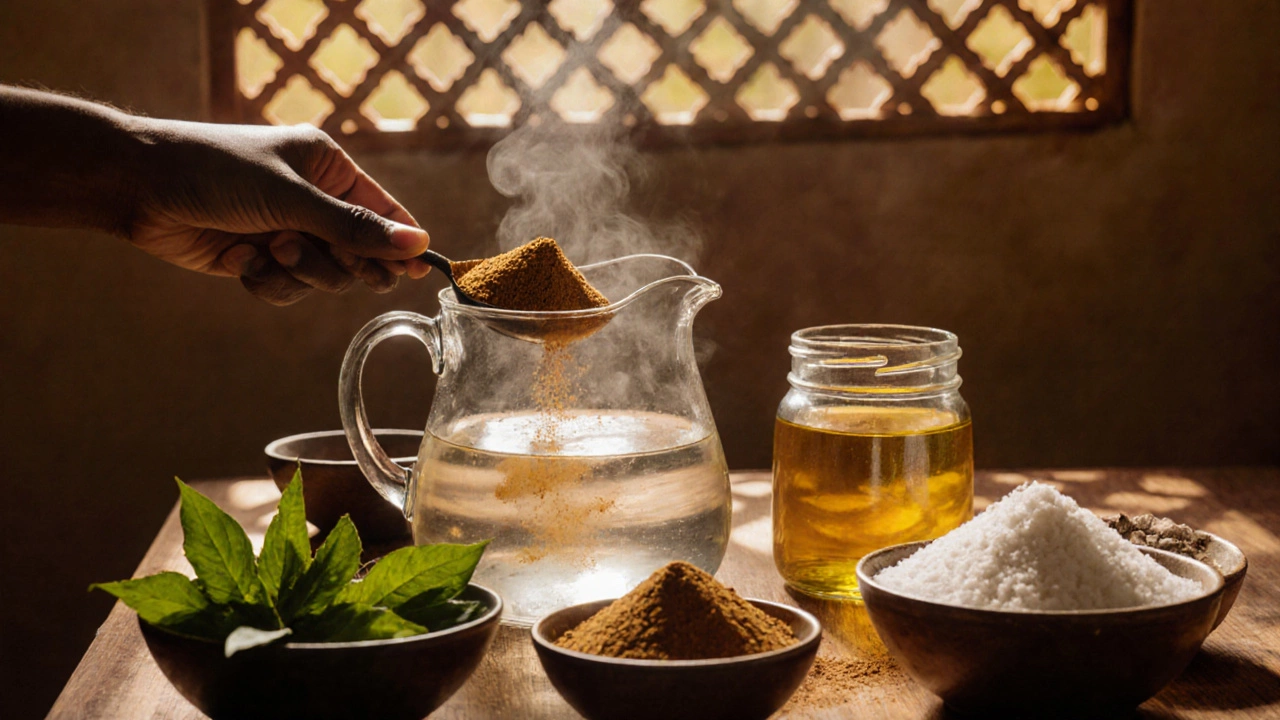
Ever wondered why many Indian households skip the bottle of commercial shampoo and still boast glossy, strong hair? The answer lies in a centuries‑old tradition that blends herbal wisdom with daily rituals. In this guide you’ll discover the plants, oils, and simple preparations that Indian families have trusted for generations, and how you can bring those practices into your own bathroom.
Key Takeaways
- Ayurvedic hair care relies on herbs like Amla, Shikakai, Reetha, Neem and coconut oil.
- Each herb targets a specific scalp need - from oil control to dandruff prevention.
- DIY recipes can be made with ingredients available at most Indian grocery stores.
- Combining herbs in a layered rinse maximizes benefits without harsh chemicals.
- Consistent use, proper water temperature, and gentle massage are essential for results.
Before jumping into recipes, let’s set the stage with the core Ayurvedic principle that guides all of these ingredients.
Ayurvedic Foundations of Hair Care
In Ayurveda, hair is considered an extension of the skin and is governed by the Doshas - Vata, Pitta and Kapha. Balancing the dominant dosha of your scalp helps prevent dryness, excess oil, or premature greying. For most Indians, a Pitta‑dominant scalp (prone to oiliness and inflammation) benefits from cooling, astringent herbs, while a Vata‑dominant scalp (dry, frizzy) needs nourishing, moisturizing agents.
Core Herbs and Their Roles
The backbone of Indian hair washing are a handful of herbs that each bring a distinct therapeutic action. Below you’ll find their definitions, key benefits, and typical preparation methods.
Amla (Indian Gooseberry)
Amla is packed with vitamin C and antioxidants, which strengthen the hair shaft and darken greying strands. It also balances pitta, reducing scalp inflammation.
Shikakai (Acacia concinna)
Shikakai means “hair destroyer” in Sanskrit, but the name is a misinterpretation - the plant actually cleanses without stripping natural oils. Its saponins create a mild lather, making it an excellent replacement for synthetic surfactants.
Reetha (Soapnut)
Reetha contains natural saponins that produce a gentle foam. It adds shine, softens hair, and works well for those with sensitive scalps.
Neem (Azadirachta indica)
Neem’s antibacterial and antifungal properties make it a go‑to for dandruff and scalp itch. It also helps regulate excess sebum.
Coconut oil
Cold‑pressed coconut oil penetrates the hair cuticle, reducing protein loss during washing. It also moisturises dry, brittle strands and acts as a carrier for other herbs.
Brahmi (Bacopa monnieri)
Brahmi calms the nervous system, which in turn reduces stress‑related hair fall. It also promotes a healthier scalp microbiome.
Henna (Lawsonia inermis)
Henna deposits a protective red‑orange pigment on the hair shaft, shielding it from UV damage and chemical aggression.
Hibiscus (Hibiscus rosa‑sinensis)
Rich in amino acids, hibiscus promotes hair growth and adds natural luster.
Tulsi (Holy Basil)
Tulsi’s anti‑inflammatory compounds soothe irritated scalps and deter bacterial overgrowth.
Sesame oil (Til oil)
Sesame oil is heat‑stable and rich in omega‑6 fatty acids, making it ideal for pre‑wash scalp massages.
Choosing the Right Combination for Your Scalp
Understanding your scalp type helps you mix the right herbs. Here’s a quick decision matrix:
| Scalp Concern | Primary Herb | Supporting Ingredient |
|---|---|---|
| Excess oil (Pitta) | Neem | Reetha |
| Dryness / Frizz (Vata) | Amla | Coconut oil |
| Dandruff (Kapha) | Shikakai | Neem |
| Hair thinning | Brahmi | Sesame oil |
Step‑by‑Step Daily Hair Wash Routine
- Prep the herbal rinse. Choose one or two herbs from the matrix above. For a basic blend, combine 2 tbsp of powdered Shikakai with 1 tbsp of powdered Amla. Add 4 cups of warm water, stir, and let it sit for 30 minutes.
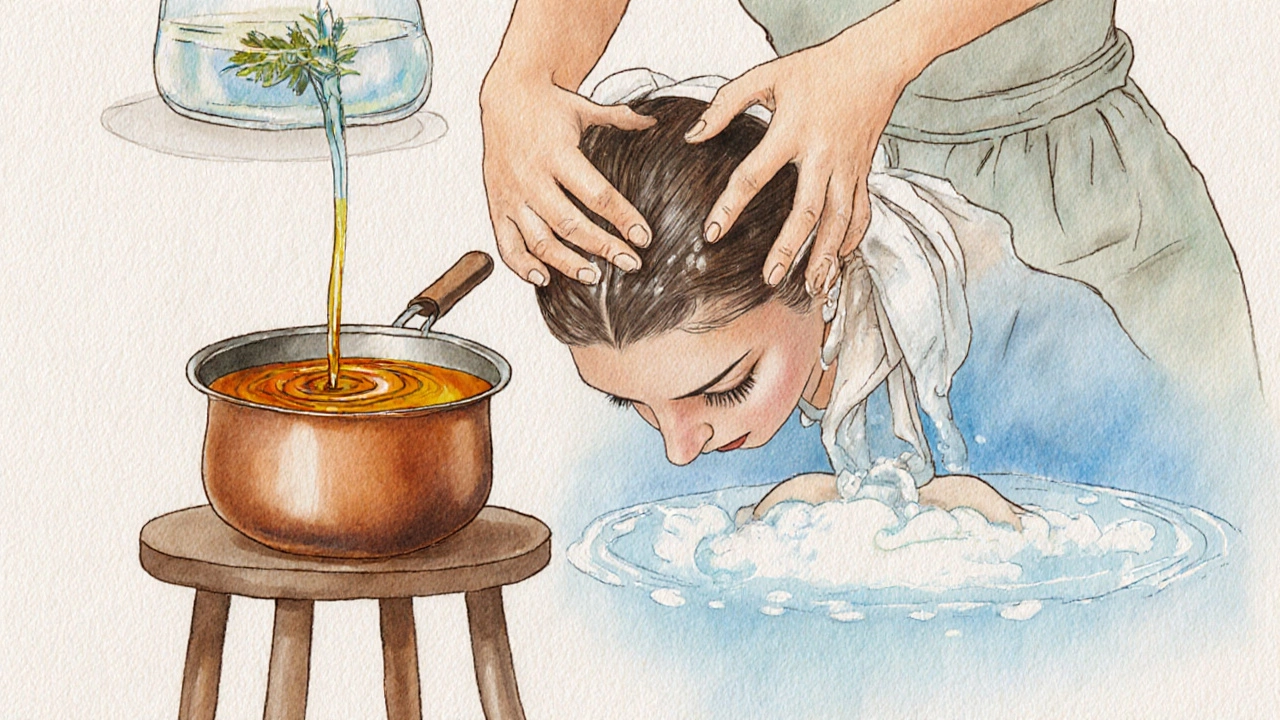
- Oil your scalp (optional). Warm 1‑2 tbsp of Coconut oil or sesame oil, massage gently for 5 minutes. This step softens the cuticle and prepares the scalp for cleansing.
- Wet your hair with lukewarm water. Avoid hot water - it strips natural oils and can aggravate pitta.
- Apply the herbal rinse. Pour the strained liquid over your scalp, massage in circular motions for 2‑3 minutes, then let it sit for another 5 minutes. The saponins in Shikakai and Reetha create a light lather without chemicals.
- Rinse thoroughly. Use cool water for the final rinse to close the cuticle, leaving hair smooth.
- Condition (optional). A thin whisk of aloe vera gel works as a post‑wash conditioner for extra shine.
Following this routine 2‑3 times a week is enough for most hair types. Over‑washing can upset the natural oil balance, especially for dry scalps.
DIY Recipes You Can Make Today
Below are three ready‑to‑try formulas. Adjust quantities based on hair length.
Cooling Neem‑Reetha Shampoo
- 2 tbsp powdered Neem leaves
- 2 tbsp powdered Reetha
- 4 cups warm water
- 1 tsp tea tree essential oil (optional)
Steep the powders in water for 45 minutes, strain, and add tea tree oil. Use as described in the routine.
Strengthening Amla‑Brahmi Mix
- 1 tbsp Amla powder
- 1 tbsp Brahmi powder
- 2 tbsp coconut oil (melted)
- 4 cups warm water
Mix powders with water, let sit, then stir in melted coconut oil before applying. This blend is excellent for post‑partum hair loss.
Shine‑Boosting Hibiscus‑Henna Rinse
- 2 tbsp hibiscus powder
- 1 tbsp henna powder (light shade)
- 4 cups warm water
Allow the mixture to develop for an hour; the natural dye adds subtle sheen and protects against UV.

Common Mistakes & How to Avoid Them
- Using hot water. It opens the cuticle excessively, causing frizz and greying.
- Skipping the oil massage. Oils deliver the herbs deeper into the scalp and keep hair hydrated.
- Mixing too many herbs at once. Over‑complex blends can cause scalp irritation. Stick to two primary herbs per wash.
- Neglecting storage. Store powdered herbs in airtight containers away from sunlight to preserve potency.
When to Seek Professional Help
If you notice sudden hair loss, persistent itching, or sores that don’t improve after 4‑6 weeks of herbal care, consult a dermatologist or an Ayurvedic practitioner. Sometimes an underlying hormonal issue or fungal infection needs prescription‑level treatment.
Frequently Asked Questions
Can I use these herbs if I have a sensitive scalp?
Yes. Most herbs like Reetha and Shikakai are naturally gentle. Start with a half‑strength rinse and observe any reaction before full strength.
How long does it take to see results?
Consistent use for 4‑6 weeks typically yields noticeable softness and reduced dandruff. Strengthening benefits like reduced breakage may take 2‑3 months.
Do I need to buy all these herbs at once?
No. Begin with the two herbs that match your biggest scalp concern, then expand your collection as you get comfortable.
Can I replace the oil massage with a serum?
A serum that contains pure oils and no silicones works, but traditional warm oil provides the heat‑enhanced penetration that most modern serums lack.
Is it safe to use these methods on colour‑treated hair?
Generally yes, but avoid henna if you want to preserve a bright artificial colour. Stick to neutral herbs like Shikakai and Reetha.
By mixing ancient wisdom with a few modern tweaks, you can enjoy cleaner, healthier hair without the harsh chemicals found in most store‑bought shampoos. Give one of these recipes a try and watch your hair transform-naturally.