
Orthopedic Recovery Timeline Estimator
Select Procedure
Note: Timelines are averages. Individual results vary based on age, health, and adherence to rehab.
Spinal Fusion Timeline
Up to 12 MonthsYou just walked out of the operating room. The anesthesia is wearing off, and your family is asking the same question everyone asks when a procedure goes well but feels huge: "How long until I'm actually normal again?" It’s not always about how complex the surgery was technically. Sometimes, the simplest-looking fix takes months to heal because of where it happened or what tissues were involved.
Most people assume major surgeries like heart bypasses take the longest to recover from. But in the world of orthopedics, some procedures quietly demand far more patience than you’d expect. If you’re facing a big operation-or helping someone who is-you need realistic timelines, not just medical jargon. Here’s what really happens during those long weeks and months.
The Spinal Fusion Reality Check
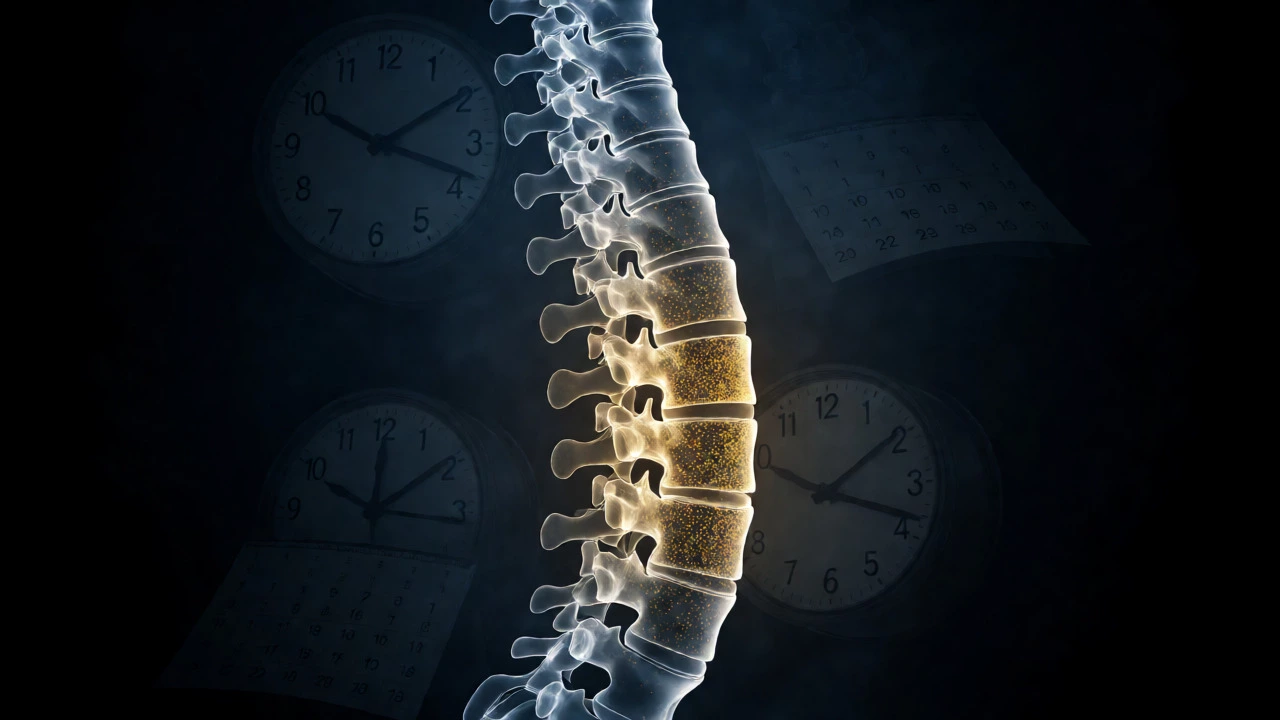
If we’re talking strictly about bone healing, Spinal Fusion is a surgical procedure that permanently connects two or more vertebrae, eliminating motion between them. It’s often done for severe back pain, scoliosis, or degenerative disc disease. This isn’t just a cut-and-stitch job. Your body has to knit solid bone across the spine. That process doesn’t care about your work schedule or vacation plans.
While you might be up and walking within a day or two, true biological fusion takes 3 to 6 months. Full strength and flexibility? That can stretch to a year. You’re dealing with hardware-screws, rods, cages-that hold everything in place while nature does its slow work. Pain management becomes a marathon, not a sprint. Many patients report that month three is harder than month one, simply because the initial adrenaline wears off, and the stiffness sets in.
Total Joint Replacements: Not All Are Equal
When people hear "joint replacement," they usually think of knees or hips. Both are major, but their recovery curves differ significantly. A Total Hip Replacement is a surgical procedure that replaces the damaged hip joint with an artificial prosthesis. Patients often walk with assistance the next day. Most return to light daily activities within 4 to 6 weeks. Driving might happen around week 6 if you had right-side surgery.
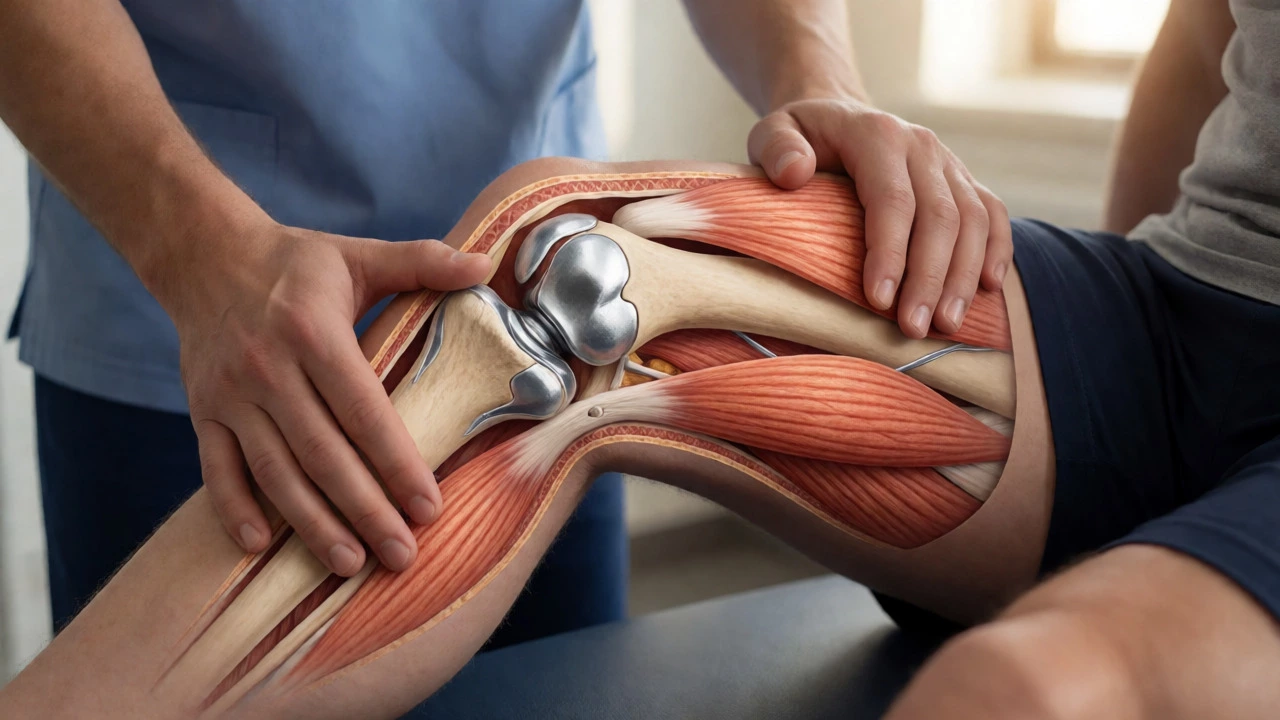
Knees are trickier. Total Knee Replacement is a procedure that resurfaces the worn-out parts of the knee joint with metal and plastic components. The rehab is brutal because the quadriceps muscles have been detached and reattached. You don’t just "walk it off." You fight for every degree of flexion. Full recovery-where you forget you even had surgery-often takes 9 to 12 months. Swelling can persist for over a year. It’s mentally taxing because progress feels non-linear.
| Surgery Type | Initial Mobility | Return to Desk Work | Full Biological Healing |
|---|---|---|---|
| Spinal Fusion | 1-2 Days (with brace) | 4-8 Weeks | 6-12 Months |
| Total Knee Replacement | Next Day (walker/crutches) | 6-8 Weeks | 9-12 Months |
| Total Hip Replacement | Next Day (crutches) | 4-6 Weeks | 6-9 Months |
| ACL Reconstruction | Crutches for 2-4 Weeks | 2-4 Weeks | 9-12 Months |
Ligament Repairs: The ACL Trap
Athletes fear the ACL Reconstruction is a surgical procedure to replace a torn anterior cruciate ligament in the knee with a graft. It’s common in sports injuries. The surgery itself is quick, often under two hours. But the recovery? It’s a psychological and physical grind.
You’re on crutches for weeks. Physical therapy starts almost immediately, but it’s painful. The graft needs time to integrate into your bone tunnels. Rushing this leads to re-tears. Most surgeons won’t clear you for contact sports until the 9-month mark. Some athletes take a full year. The frustration comes from feeling "good enough" at month four, only to hit a plateau at month six. Patience here literally saves your career.
Why Bone Takes So Long
Soft tissue heals fast. Skin closes in days. Muscles repair in weeks. Bones? They remodel slowly. This is why orthopedic surgeries dominate the "longest recovery" lists. When you break a leg or fuse a spine, you’re waiting for calcium deposits to harden and restructure. Blood supply matters hugely here. Smoking, diabetes, or poor nutrition can double these timelines. In Bangalore’s humid climate, some patients find wound care tricky in the first few weeks, adding another layer of caution.
Also, consider nerve damage. Nerves heal at roughly 1 millimeter per day. If a surgery involved retractors near nerves (common in spine work), numbness or tingling can last for a year or more. It’s rarely permanent, but it’s annoying and scary if you weren’t warned.
Factors That Stretch Your Recovery
Not everyone heals at the textbook speed. Age plays a role, obviously, but so do lifestyle habits. If you’re overweight, joints bear extra load during rehab, slowing progress. Mental health matters too. Depression after major surgery is real-it’s called post-operative depression, and it affects motivation to do physical therapy. Without that drive, you lose muscle mass, making recovery harder.
Access to care changes things. In cities like Bangalore, having a good physiotherapist nearby makes a massive difference. Traveling for appointments adds fatigue. Insurance approvals for extended rehab can also cause delays. Don’t underestimate the logistical stress; it drains energy needed for healing.
Managing Expectations: A Practical Guide
So, how do you survive these long recoveries? First, set micro-goals. Instead of "I’ll run by December," aim for "I’ll bend my knee 5 degrees further this week." Celebrate small wins. Second, prepare your home. Remove trip hazards. Get a shower chair if you’re doing hip or knee work. Third, build a support team. Friends help with meals, but professional caregivers might be needed for the first two weeks.
Communication with your surgeon is key. Ask specifically: "What does 'normal' look like at 3 months vs. 6 months?" Vague answers lead to anxiety. Get it in writing if possible. And remember, setbacks happen. A flare-up of pain at month five doesn’t mean failure. It’s part of the curve.
Frequently Asked Questions
Which surgery has the absolute longest recovery time?
Complex spinal fusions involving multiple levels often have the longest recovery, sometimes taking up to a year for full functional recovery. However, total knee replacements also frequently require 9-12 months for patients to feel completely normal, despite earlier mobility milestones.
Can smoking delay my orthopedic recovery?
Yes, significantly. Nicotine constricts blood vessels, reducing oxygen flow to bones and soft tissues. Studies show smokers have higher rates of non-union (failure to heal) in spinal fusions and slower wound healing in joint replacements. Quitting before surgery is one of the best things you can do.
Is pain worse at the beginning or later in recovery?
Acute surgical pain is highest in the first 1-2 weeks. However, many patients report increased discomfort during physical therapy sessions weeks later as stiff joints are mobilized. This is normal inflammation response, not necessarily a sign of complication.
How soon can I drive after knee replacement?
Typically 4 to 6 weeks, depending on which leg was operated on and whether you drive an automatic or manual car. Right-leg surgery usually requires longer due to reaction time concerns. Always get clearance from your surgeon first.
Does age affect recovery time for joint surgeries?
Age impacts healing speed, but overall health matters more. An active 70-year-old may recover faster than a sedentary 40-year-old with obesity or diabetes. Muscle strength prior to surgery is a strong predictor of post-op success.
Final Thoughts
Recovery isn’t a race. It’s a reconstruction project. Whether you’re fusing a spine or replacing a knee, the timeline is dictated by biology, not desire. Plan for the long haul. Invest in quality rehab. Listen to your body, not just the calendar. You’ll get there, but giving yourself permission to heal slowly is the secret weapon most patients overlook.