ADHD Fact or Myth Quiz
Results
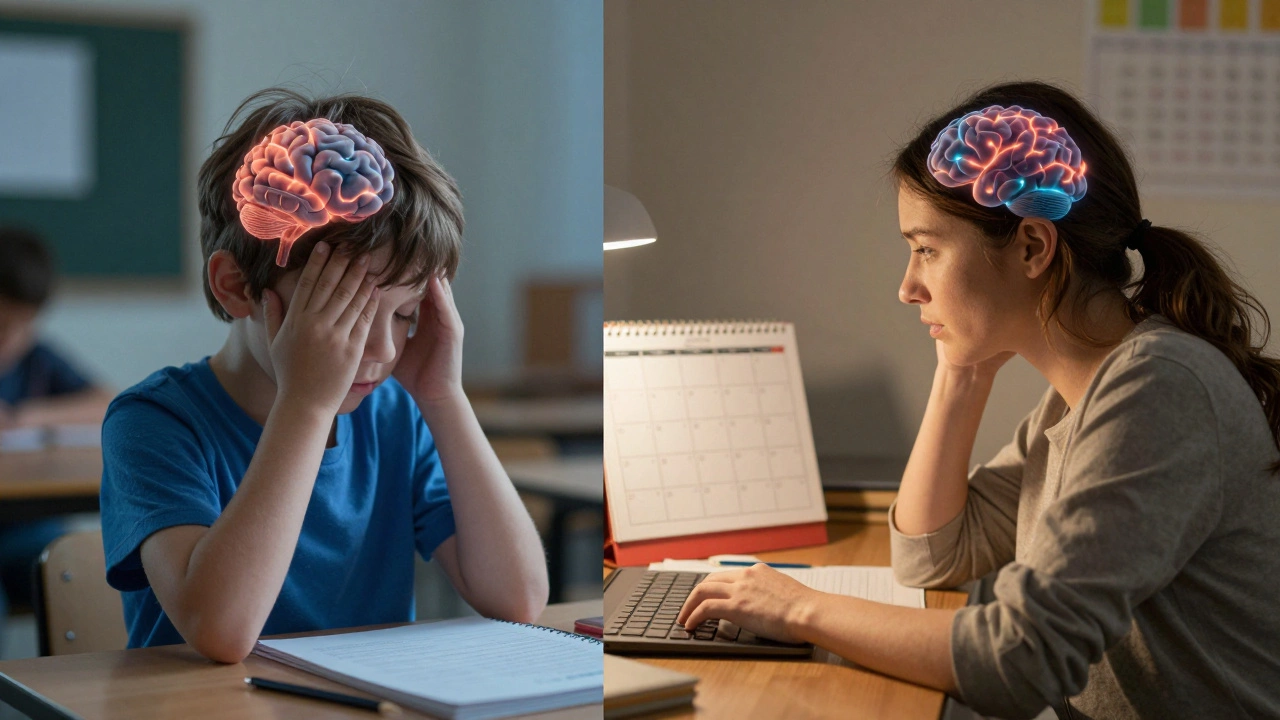
Is ADHD a mental illness? The answer isn’t as simple as yes or no-and that’s where most confusion comes from. People hear "mental illness" and picture severe psychosis, hospitalizations, or lifelong medication. But ADHD doesn’t fit that stereotype. It’s not about hearing voices or losing touch with reality. It’s about a brain that struggles to focus, stay organized, or sit still-not because of laziness, but because of how it’s wired.
What ADHD really is
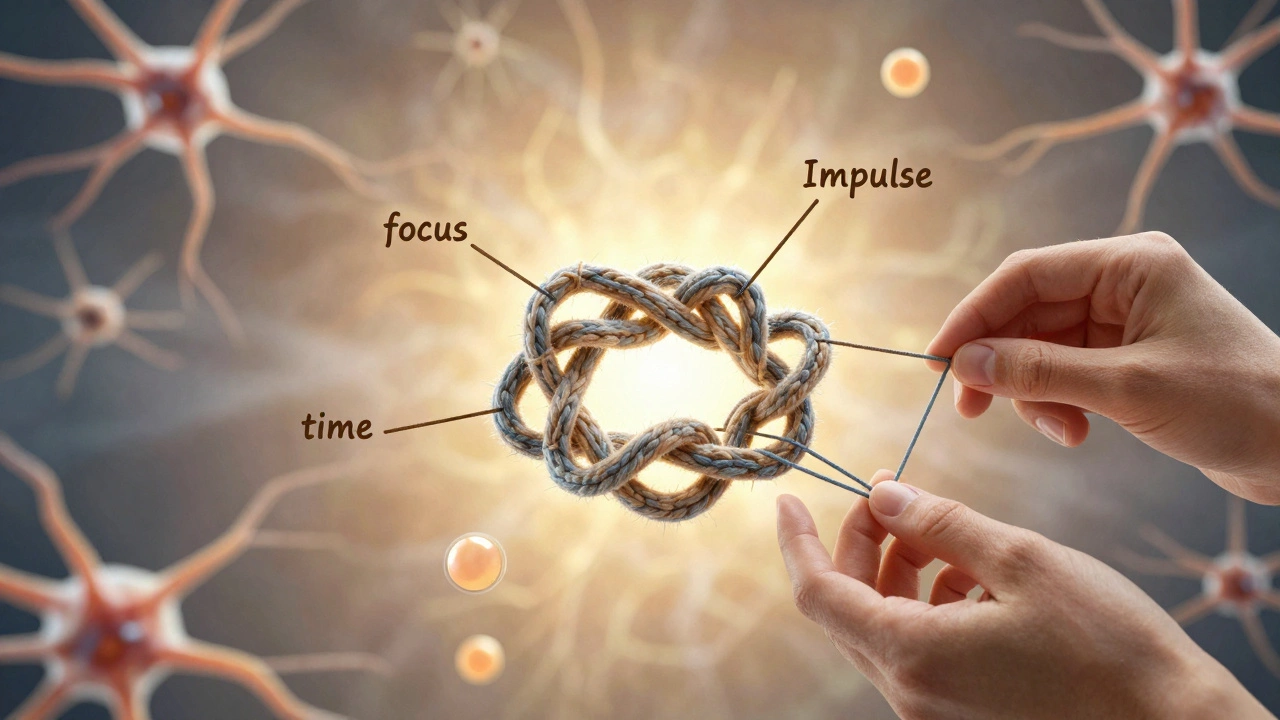
ADHD, or Attention-Deficit/Hyperactivity Disorder, is a neurodevelopmental condition. That means it shows up early in life, often before age 12, and affects how the brain develops and functions. It’s not something you catch like a cold. It’s not caused by bad parenting, too much screen time, or sugar. Research shows it’s rooted in differences in brain structure and chemistry-especially in areas that control attention, impulse control, and executive function.
Studies using MRI scans have found that people with ADHD often have slightly smaller volumes in the prefrontal cortex and basal ganglia. These regions help with planning, decision-making, and regulating emotions. Dopamine and norepinephrine levels, two key brain chemicals for focus and motivation, also tend to be lower or less efficiently used in those with ADHD. This isn’t a choice. It’s biology.
Why the confusion about "mental illness"
The term "mental illness" carries heavy baggage. In pop culture, it’s tied to schizophrenia, bipolar disorder, or severe depression. ADHD doesn’t always look like that. A child with ADHD might be the one fidgeting in class. An adult might be the one who forgets appointments, misses deadlines, or feels overwhelmed by simple tasks. They don’t cry all day. They don’t hear commands from voices. So people assume, "That’s just being distracted. Everyone gets that." But here’s the thing: ADHD meets all clinical criteria for a mental illness. The American Psychiatric Association lists it in the DSM-5-the official guide used by doctors worldwide to diagnose mental disorders. So does the World Health Organization in its ICD-11. Both classify ADHD as a mental disorder. Not a behavior problem. Not a learning disability. A mental illness.
ADHD vs. learning disabilities
Many people mix up ADHD with learning disabilities like dyslexia or dyscalculia. But they’re different. A learning disability affects how you process specific types of information-like reading numbers or decoding words. ADHD affects your ability to manage attention, control impulses, and organize tasks across all areas of life.
You can have ADHD without a learning disability. You can have a learning disability without ADHD. But about 30% to 40% of people with learning disabilities also have ADHD. That overlap makes diagnosis tricky. A child who struggles in school might be labeled "slow" or "unmotivated." But if they’re also constantly interrupting, losing homework, or unable to sit still, ADHD is likely part of the picture.

Is ADHD a disability?
Yes, under certain laws. In the U.S., ADHD qualifies as a disability under the Americans with Disabilities Act (ADA) if it substantially limits major life activities like concentrating, working, or learning. In India, the Rights of Persons with Disabilities Act (2016) includes neurodevelopmental disorders like ADHD under its definition of disability, making students eligible for exam accommodations, extended time, or scribes in schools and colleges.
But here’s the catch: not everyone with ADHD needs accommodations. Some manage well with structure, routines, or mild medication. Others struggle daily. It’s a spectrum. One person might be a high-performing lawyer who uses timers and lists. Another might be a teenager who can’t finish a paragraph without getting distracted. Both have ADHD. Both are valid.
Common myths about ADHD
- Myth: ADHD is just kids being hyper. Fact: ADHD affects adults too. About 4% of adults worldwide have it. Many go undiagnosed until their 30s or 40s.
- Myth: Only boys get ADHD. Fact: Girls and women often have the inattentive type, which is quieter. They’re more likely to be overlooked as "daydreamers" or "shy."
- Myth: ADHD is overdiagnosed. Fact: Studies show it’s actually underdiagnosed, especially in girls, non-white populations, and adults. In India, less than 1 in 10 children with ADHD receive proper evaluation.
- Myth: Medication is the only solution. Fact: Behavioral therapy, coaching, structure, and lifestyle changes work too. Medication helps many, but it’s not a magic pill.
How ADHD is diagnosed
There’s no blood test or brain scan that confirms ADHD. Diagnosis comes from a trained clinician-psychiatrist, psychologist, or neurologist-using detailed interviews, behavior checklists, and history from parents, teachers, or partners. They look for symptoms that:
- Started before age 12
- Appear in at least two settings (home, school, work)
- Significantly interfere with daily life
- Can’t be better explained by another condition like anxiety or sleep deprivation
In India, many general practitioners still don’t recognize adult ADHD. Patients are told to "just try harder" or are misdiagnosed with anxiety. That’s why specialist clinics in cities like Bangalore, Delhi, or Mumbai are seeing a rise in adult ADHD referrals.
Treatment options
There’s no cure for ADHD-but there are effective ways to manage it.
- Medication: Stimulants like methylphenidate (Ritalin) and amphetamines (Adderall) are the most studied. They work by increasing dopamine and norepinephrine. Non-stimulants like atomoxetine (Strattera) are used when stimulants don’t work or cause side effects.
- Behavioral therapy: CBT (Cognitive Behavioral Therapy) helps adults restructure habits, reduce procrastination, and manage emotional reactions. Parent training helps children learn structure and positive reinforcement.
- Lifestyle: Regular sleep, exercise, and minimizing distractions (like turning off phone notifications) make a huge difference. One 2023 study in the Journal of Clinical Psychiatry found that adults with ADHD who exercised 3x a week improved focus as much as those on low-dose medication.
- Coaching: ADHD coaches help with organization, time management, and accountability. This isn’t therapy-it’s practical support.
Combining approaches works best. Medication might help you sit still long enough to start a task. Therapy helps you learn how to keep going. Coaching helps you build systems so you don’t have to rely on willpower.
ADHD and stigma
Stigma is still the biggest barrier to getting help. In many Indian households, mental health is whispered about. "Why can’t you just focus?" "You’re not trying hard enough." "We didn’t have this when we were kids."
But the science is clear: ADHD is not a moral failing. It’s not laziness. It’s not a phase. It’s a real, measurable condition that affects brain function. And like diabetes or asthma, it needs understanding, not judgment.
When someone with ADHD finally gets diagnosed, the relief is often overwhelming. "Oh. So it’s not me. It’s my brain." That moment changes everything. It shifts blame to biology. It opens doors to treatment. It gives people back their self-worth.
What’s next?
ADHD research is moving fast. New studies are looking at gut-brain connections, genetic markers, and personalized treatment based on brainwave patterns. In India, awareness is slowly growing. More schools are training teachers. More clinics are offering ADHD evaluations. More adults are speaking up.
If you’ve ever felt like your brain is working against you-if you’re constantly behind, forgetful, or overwhelmed by simple tasks-you’re not alone. And you’re not broken. You might just have ADHD.
The question isn’t whether ADHD is a mental illness. The real question is: why are we still treating it like a character flaw instead of a medical condition?
Is ADHD a mental illness or a behavioral issue?
ADHD is classified as a mental illness by the American Psychiatric Association (DSM-5) and the World Health Organization (ICD-11). It’s not just a behavioral issue-it’s a neurodevelopmental disorder with measurable differences in brain structure and chemistry. While behavior is affected, the root cause is biological, not a lack of discipline or motivation.
Can ADHD be outgrown?
About 60% of children with ADHD continue to have symptoms into adulthood. The hyperactivity may fade, but inattention, disorganization, and impulsivity often remain. Some adults learn coping strategies that make symptoms less obvious, but the underlying brain differences don’t disappear. What changes is how they manage it-not whether they have it.
Does ADHD only affect children?
No. ADHD is a lifelong condition for many. While it’s often diagnosed in childhood, a large number of adults-especially women-go undiagnosed until later in life. Symptoms in adults look different: chronic lateness, difficulty managing bills, emotional overwhelm, or job instability. Many adults only recognize ADHD after their child is diagnosed.
Is medication necessary for ADHD?
Medication isn’t necessary for everyone, but it’s highly effective for many. Stimulant medications improve focus and impulse control in 70-80% of cases. However, behavioral therapy, coaching, routines, and lifestyle changes can also help significantly. The best outcomes usually come from combining treatments, not relying on one alone.
How common is ADHD in India?
Studies estimate that 5-7% of children and 2-4% of adults in India have ADHD. But due to stigma, lack of awareness, and limited access to specialists, fewer than 10% receive proper diagnosis. Urban centers like Bangalore, Delhi, and Pune have more clinics offering evaluations, but rural areas still lack resources.